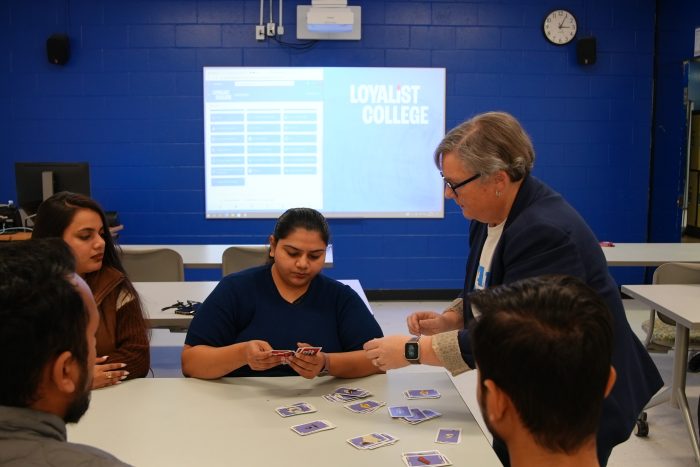
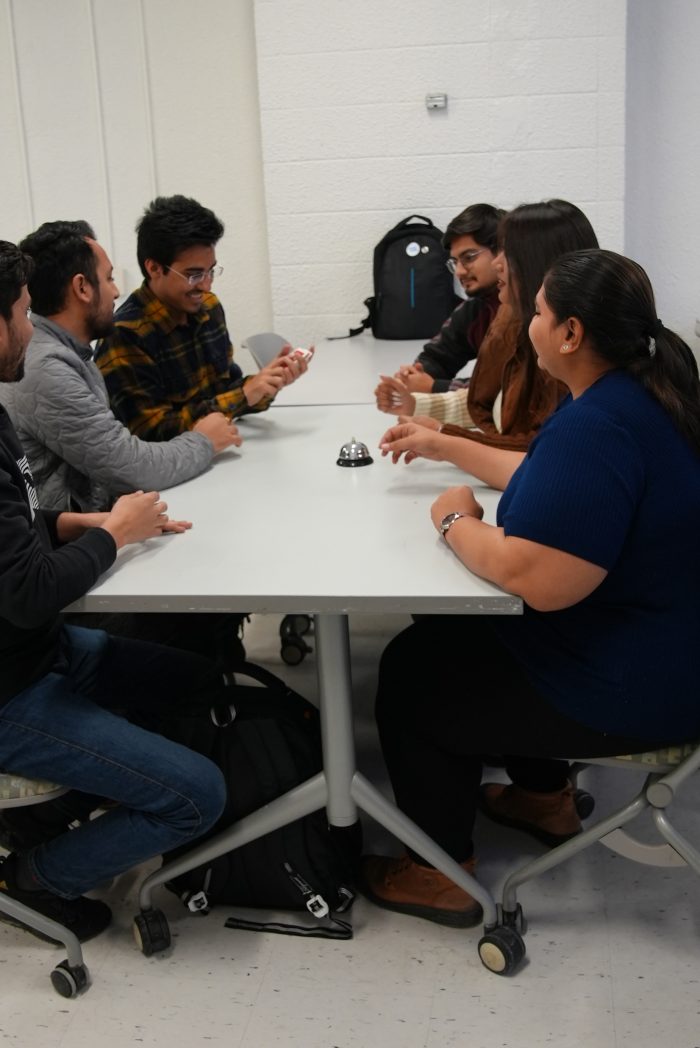
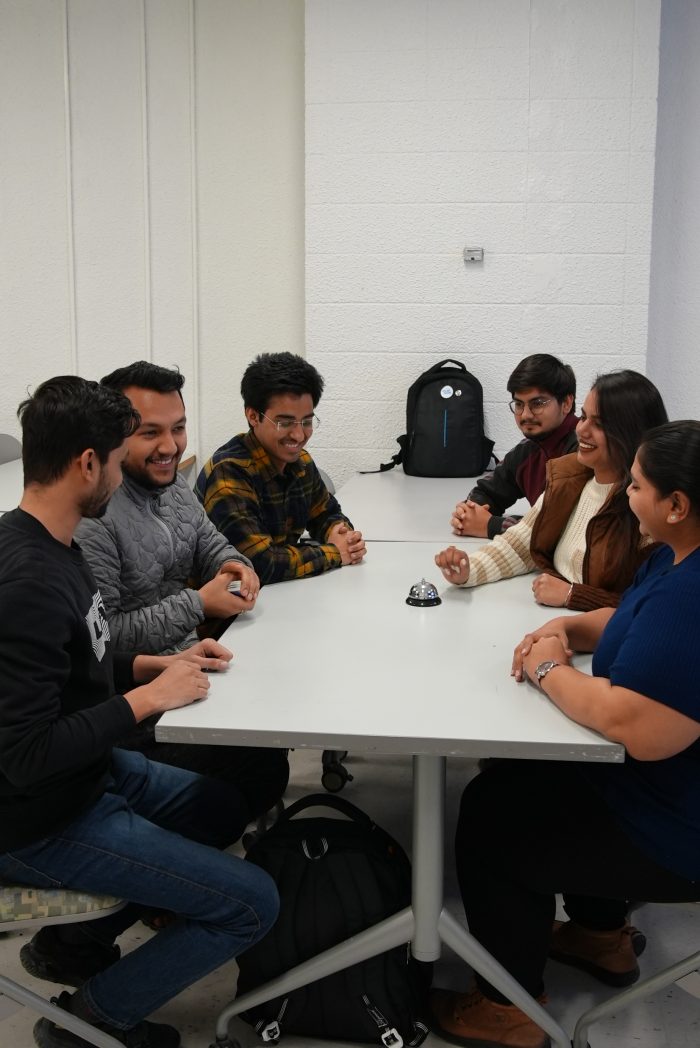
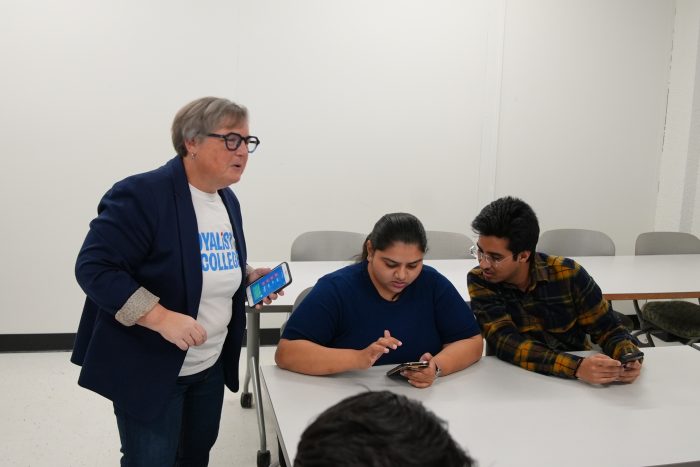
Accounting is more than filing taxes and bookkeeping. It’s about understanding a business from the ground up and guiding it through sound financial practice. Every business has a numbers story. Whether it’s in the fields of manufacturing, services, travel, art, health, fashion, real estate or sports — the options are endless. Create the career you want working part-time, full-time, in an office, remotely, locally, nationally or internationally.
Find your career
Accounting skills are in demand in virtually every field:
- You could work as a financial analyst, accountant, budget officer, account manager, financial planner, payroll officer or external auditor.
- There are opportunities in arts and entertainment, news media, marketing, manufacturing, education, health and wellness, service industries and sports organizations.
- Find the right fit — employers include large and small enterprises, the government, as well as not-for-profit agencies — or start your own business.
- With third-year studies in Canadian Public Sector Financial Management, advanced diploma graduates are uniquely positioned to take advantage of growing opportunities in the public and not-for-profit sectors.
- Start at Loyalist and put your career on track to become a Chartered Professional Accountant (CPA) with advanced standing towards a university degree. Visit cpaontario.ca
for more details. Visit
ontransfer.ca for additional information on transferring your College diploma to universities in Ontario.
Our grads get great jobs
- Accountant, Quinte Conservation
- Accountant, Wilkinson & Company, LLP, Chartered Professional Accountants
- Accounting Manager – Closson Chase Vineyards Inc.
- Accounts Payable Associate, Stream Global Services
- Auditor, Canada Revenue Agency
- Financial Analyst, Corrections Canada
- Financial Analyst, Amer Sports Canada Inc.
- Junior Accountant, Welch LLP, Chartered Accountants
- Office Manager – CBI Health
- Personal Banking Officer, Bank of Nova Scotia
- Accountant, Habitat for Humanity, Prince Edward Hastings
- Accountant, The Children's Foundation
Is it for you?
People who thrive in accounting have an eye for detail while being able to see the big picture. This may be a good fit if you have skills in:
- Written and oral communication.
- Organization and attention to detail.
- Analysis and problem-solving.
- Time management.
- Systems analysis.
- Mathematical and deductive reasoning.
- Critical thinking.
- Active learning.
- Clerical knowledge.
- Proficiency with Microsoft Office Suite.
- Commitment to excellence.
Experiential learning
This program delivers concrete, marketable skills with a dual focus on financial and management accounting:
- Develop managerial skills in budgeting, product costing and price setting, eliminating financial waste and finding operating efficiencies.
- Access opportunities to gain certification in industry-leading software such as MS Excel, Sage 50 Accounting and QuickBooks.
- A third year of study provides advanced knowledge of financial and management accounting, corporate taxation and audit techniques.
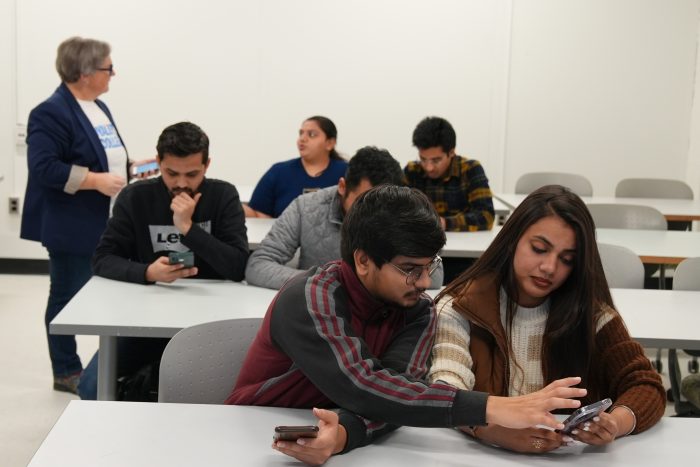
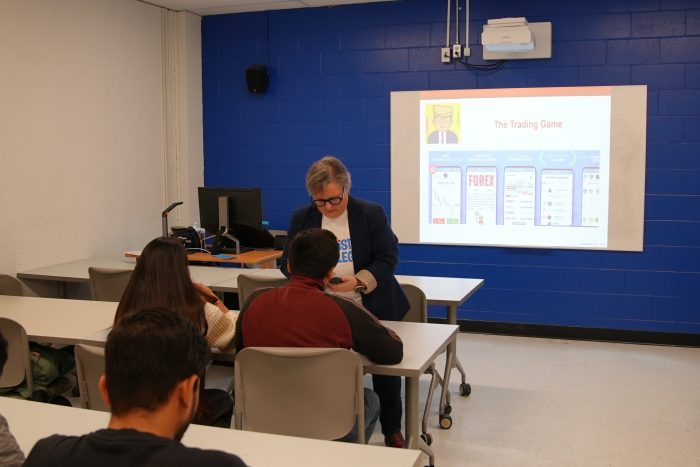
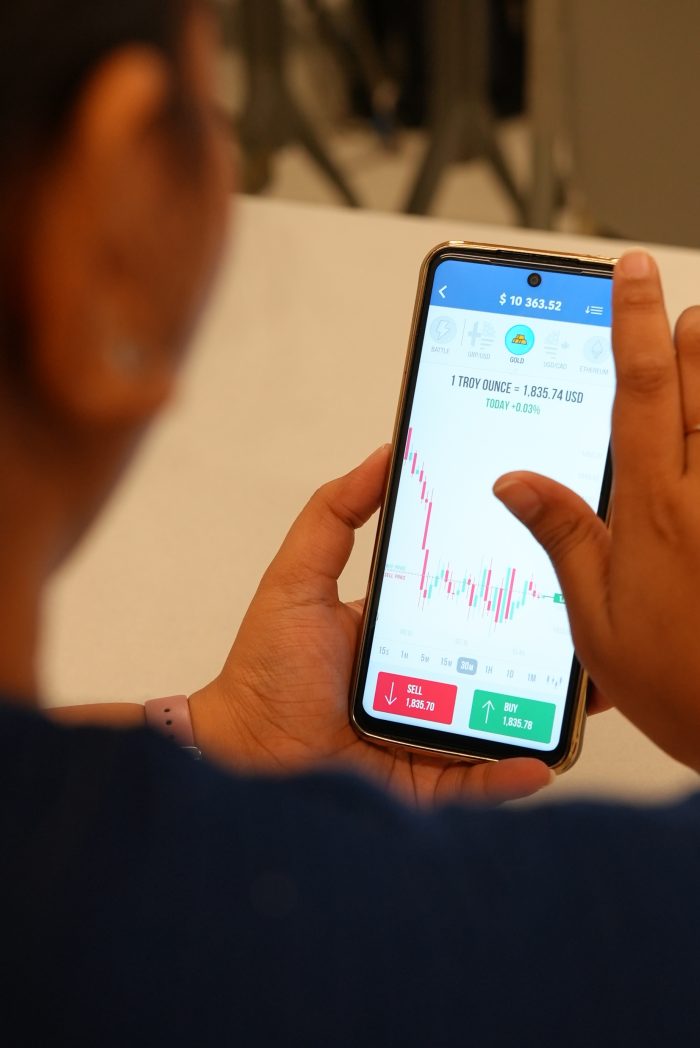
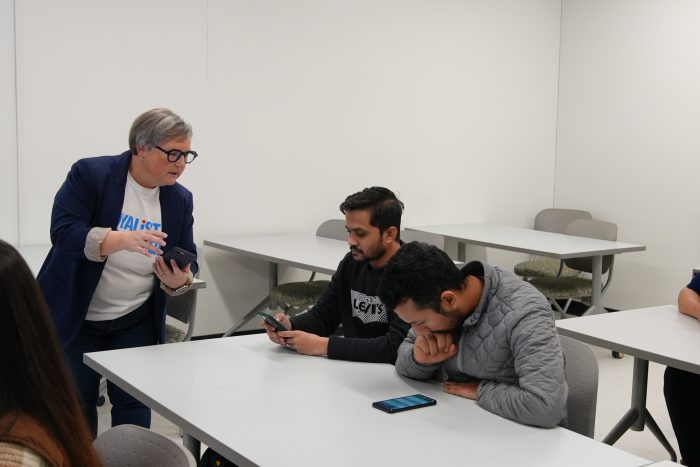
- Collaborate and formulate strategy in simulated business competitions.
- Learn from case studies and guest speakers from the local business community.
-
Put your skills to work in Loyalist’s Service-Learning Community Clinics in semesters 5 and 6. Hone your customer service skills while assisting local small businesses and not-for-profit agencies with their accounting, budget and payroll needs. In semester 6, the Clinic operates a Student Tax Clinic.
- A four-week field placement in third year provides valuable industry experience and networking, and the opportunity to graduate into a job.
Outstanding faculty make the difference
- Learn with enthusiastic Chartered Professional Accountants (CPAs) who take teaching beyond textbooks and into the real world.
- Faculty include MBAs and former CFOs with extensive business experience in manufacturing, retail, public and not-for-profit sectors, aviation, transportation, real estate development, corporate acquisitions, business analysis and internal audit.
- Professors have worked with high-profile accounting firms including KPMG, Wilkinson & Company and Price Waterhouse Coopers, along with experience in the corporate, public and charitable sectors.
- First Year - Semester One
- COMP1021 Business Computer Applications - Excel
-
Organizations of varying sizes and in various sectors benefit from the use of spreadsheets. As such, individuals who have highly developed spreadsheet skills using tools such as Microsoft Excel are able to assist these organizations with their functional activities. This course explores skills such as formatting cells and worksheets; using formulas and functions; analyzing and organizing data; and presenting data visually. Upon successful completion of this course, you will have covered the components and related tasks and skills needed to prepare for the MOS (Microsoft Office Specialist) certification exam for Excel.
- COMP1022 Business Computer Applications 1
-
This course develops the skills required for success in the business community. Emphasis is placed on writing for the workplace to facilitate the design, creation and delivery of business communications. You will use email, letter and memorandum writing, formal report writing, and internal and external communications to create focused messages with appropriately sourced facts, for a variety of business audiences.
- MATH1033 Business Math
-
This course covers the basic skills required by students to comprehend the essentials of business mathematics. Topics covered include an arithmetic and algebra review, percentages, ratios, commercial mathematics, and simple and compound interest.
- ACCT1000 Financial Accounting 1
-
Learn the essentials of accounting by examining the role of accounting in planning and controlling business operations. Using Generally Accepted Accounting Principles (GAAP), you will be introduced to the basics of accounting including the balance sheet, the income statement, books of original entry, the trial balance and the general ledger. The focus of this course is on your development of strong bookkeeping skills and an understanding of how and why entries are made in a business' books. You will also focus on the Accounting Standards for Private Enterprises (ASPE) used in small to medium-sized, privately-owned businesses.
- BUSI1016 Introduction to Business
-
This course provides an overview of business in the Canadian environment using an integrated model. Topics covered include: the environment of business (social, technological, economic and political) as well as functional areas of business (marketing, accounting, finance, production and human resources) and legal and corporate governance information. A semester-long group project will provide you with the opportunity to explore the world of business, create work habits related to researching a company and stay current with what is going on in the business world.
- MRKT1005 Introduction to Marketing
-
Welcome to marketing! You will learn how businesses reach and influence their customers. This course covers far more than advertising. You will discover how to create a marketing plan that can sell.
- First Year - Semester Two
- COMM1080 Communications
-
You are introduced to the various types of business communication that you will be expected to prepare and/or explain throughout your career, including business plans, legal contracts, employment forms, policies and procedures, and others. The course will focus on the components of good communication, including word choice, tone, format, oral and visual communications, and conducting oneself in meetings. A major project in the course will have you analyzing and explaining the notes to the financial statements which are an integral part of the reporting function.
- ECON2000 Economics
-
Use economic fundamentals to interpret today's headlines and discover tomorrow's opportunities. This course will provide you with a "micro" view of supply and demand and market competition, leading to a "macro" view of our economy (local, domestic and global) and the Canadian financial system.
- ACCT1013 Financial Accounting 2
-
The Statement of Financial Position (Balance Sheet) and its effects on related items in the Statement of Operations (Income Statement) is introduced in this course. You will focus on the asset side of the balance sheet. Topics will include cash, short-term investments, accounts receivable, inventory, prepaid expenses, capital assets, intangible assets, and other assets such as long-term investments.
Prerequisite: ACCT 1000
- ACCT3005 Personal Financial Management
-
This course is a hands-on opportunity to explore and plan for personal financial success. You will develop the tools necessary to both manage your own finances over a lifetime as well as to help and teach others about the importance of personal financial planning. Topics include: money management and household budgeting; credit management; mortgages; home and car insurance; health, disability and life insurance; tax strategies; investing and retirement savings.
- MATH1053 Statistics
-
In this course, you will be introduced to statistics. The course teaches quantitative methods used in data analysis and business decision making with a focus on the use and applications of contemporary statistical software.
- GNED1100 Becoming a Global Changemaker
-
This Loyalist College graduate attributes course will help shape your perspectives, broaden your understanding of important issues affecting our societies today, and equip you with invaluable knowledge and skills that will inform your ability to influence your community in a meaningful and impactful way. By exploring topics such as cultural competency, Indigenous education, entrepreneurship, sustainability, health and wellness, and ecological literacy, you'll be equipped with a powerful toolkit that extends far beyond the classroom.
- Second Year - Semester Three
- ACCT3007 Accounting Information Systems
-
This course introduces information systems and their role in supporting business and accounting strategies. Based on the idea that information and knowledge are key business drivers in today’s data-rich world, you will learn how information is stored and shared; examine the importance of ethics, privacy and security; and explore the role of the internet and e-business. The course also stresses the importance of internal controls and process documentation in creating, sharing and protecting information. Specific topics include: hardware and software of computer systems, file and database organization, networks and mobile technology; the systems development process, enterprise resource planning, project management and enterprise architectures.
Prerequisite: ACCT 1013
- ACCT2003 Corporate Financial Management 1
-
In this introductory course, you will develop the financial skills and logical thought processes necessary to understand and discuss the global financial environment and how it impacts our daily lives. In addition, you will learn to interpret and analyze financial statements using ratios; assess a corporation’s financial leverage and capital structure; evaluate dividend policy; determine working capital requirements; calculate cash and inventory requirements; and develop long-term financing plans.
Prerequisite: MATH 1033
- ACCT2025 Financial Accounting 3
-
Picking up from Financial Accounting 2, you will focus on the liability side of the balance sheet and its related income statement accounts. The focus of this course will be payroll and other current liabilities, long-term liabilities, partnerships, corporate organization and reporting, and cash flow statements. The course concludes with an introduction to the analysis of the financial statements using common financial ratios.
Prerequisite: ACCT 1013
- ACCT2024 Management Accounting 1
-
This course introduces the concept of cost accounting for business decision making, focusing on the internal users and uses of numerical information. The course explores the terminology and purpose of a variety of management accounting tools, including fixed and variable costs, cost-volume-profit relationships, contribution margin, job and process costing and flexible budgets. You will learn to identify costs based on their behaviour and to accumulate product costs for management use in pricing and production scenarios. Prerequisite: ACCT 1000
Prerequisite: ACCT 1013
- ACCT2026 Payroll Administration
-
This hands-on course is an introduction to payroll compliance requirements including an understanding of labour standards, the identification and calculation of earnings, and appropriate source withholdings. You will demonstrate a practical understanding of the reporting, reconciliation and remittance requirements for the Canada Revenue Agency, Service Canada, Minister of Finance for Ontario, and the Workplace safety and Insurance Board as well as financial accounting requirements. The course will involve the completion of a continuous payroll simulation for a calendar year, including the T4 summary for the year end.
Prerequisite: ACCT 1013
- GNED General Education Elective
- General Education Courses
- Second Year - Semester Four
- ACCT2027 Accounting Applications
-
Learn the fundamentals of two of the most popular off-the-shelf accounting software applications – Sage 50 (Simply Accounting) and QuickBooks – using a case-based approach. You are introduced to the general ledger, sales, purchases, inventory, and payroll components of each platform using a variety of business cases. You will learn how to set up the initial company and the recording of its daily business transactions. The case studies are used to reinforce accounting concepts in these computerized environments.
Prerequisite: ACCT 2025
- LAWS2017 Business Law & Ethics
-
Prepare for the increasingly complex world of business. Learn how the legal system and laws impact the organization and management of business enterprises. This course will focus on the principles of private law embedded in contract law, in employment legislation, in tort law and in understanding the legal decisions rendered by Canadian courts as they pertain to business. Issues of professional liability, ethics and codes of professional conduct are also discussed. You will develop an ability to recognize and respond appropriately to legal situations that can occur in an accounting/business environment.
- ACCT2028 Intermediate Accounting 1
-
A successful career in professional accounting requires well-developed analytical and critical-thinking skills. Intermediate financial accounting courses focus on standards for external financial reporting and requires you to make choices and begin to use professional judgment. This course explores the advanced framework for financial accounting and financial reporting. You will gain an in-depth understanding of financial statement presentation requirements, including what should be reported and how it should be quantified and disclosed. Revenue and expense recognition including long-term contracts are examined, and we begin an in-depth study of the asset side of the balance sheet, including cash and receivables.
Prerequisite: ACCT 2025
- ACCT2002 Management Accounting 2
-
This course deals with basic cost accounting systems such as job costing, process costing and standard costing. The focus will be on identifying and classifying costs for profit measurement, planning and control, along with the concept of variance analysis.
Prerequisite: ACCT 2024
- ACCT2029 Taxation 1 Personal
-
This course is a first look at the Canadian federal system of income taxation, its history, the principles and concepts, and the administration of the system to assess and collect taxes. Emphasis will be on determining sources of personal incomes to be reported plus available deductions and tax credits used to calculate total income tax as well as net income tax payable. Prerequisite: ACCT 1013
Prerequisite: ACCT 2025
- GNED General Education Elective
- General Education Courses
- Third Year - Semester Five
- ACCT3017 Advanced Management Accounting
-
Topics include: The role of cost management, measuring performance, managing costs of constrained resources, measuring costs of operations, activity-based costing systems, joint process costing, managing and allocating support service costs, cost estimation, financial modelling and decision making.
Prerequisite: ACCT 2002
- ACCT2020 Intermediate Accounting 2
-
This course continues to develop critical thinking and professional judgement skills. In this second of three intermediate-level courses, students will complete their study of the asset side of the balance sheet and before moving on to the liabilities side. Topics include inventories, investments, property, plant and equipment, intangibles, goodwill, current liabilities, long-term liabilities and leases.
Prerequisite: ACCT 2028
- BUSI3011 Project Management
-
Through this course, you will acquire foundational project management knowledge in the areas of project planning, defining scope and priorities, work breakdown structure, creating scheduling estimates for timing and project costs, developing project networks, communicating project information, identifying compliance and risk issues, assigning resources, identifying potential efficiencies, and managing progress. This course also introduces you to multiple project management tools available for various project types and management styles through hands-on scenarios.
- ACCT3004 Taxation 2 Corporate
-
This course is a continuation of personal taxation and an introduction to corporate taxation. Other sources of income, other deductions, attribution rules and international taxation will be examined. Basic tax planning concepts will be identified for corporations and their shareholders, plus an introduction to the use of tax software for filing corporate returns.
Prerequisite: ACCT 2029
- Third Year - Semester Five (Elective Group 1 )
- ACCT3014 Auditing Concepts
-
You will be introduced to the role and practice of the external auditor and his/her reporting functions. Internal control is emphasized along with the auditor’s objectives and techniques as applied to the accounting records. Topics include reporting, auditing standards and ethics, legal liability, evidence and documentation, planning, materiality and risk. You will also be exposed to the role of the internal auditor in the business organization along with the audit of computer-based information systems.
Prerequisite: ACCT 3007
- HRPG3003 HR Administration
-
Management of human resources has become an essential business operation. Organizations everywhere realize that the cost of human capital is a tangible asset that needs to be managed effectively in order to stay competitive. This course explores the challenges and best-practices to ensuring domestic and global human resource assets meet organizational expectations.
- BUSI2010 Occupational Health & Safety
-
Employers are required by law to ensure that workers have a safe work environment. This course examines the related federal and provincial legislation required to ensure compliance. In addition, the course explores the technical aspects of health and safety, as well as trends and best practices used in the field today.
- BUSI3024 Principles of Buying
-
This course provides a critical view into the purchasing elements in the world of Supply Chain Management. Topical focus will relate to supply organizations, quality, supplier relations, sourcing, price and cost management and the role of transportation. The scope of this course will include the private and public business sectors.
- ACCT3028 Service Learning 1
-
Entering their final year, you will be engaged in an applied learning project where you will work with community clients such as not-for-profit organizations and small business start-ups. The projects will involve the creation of accounting records for your clients, including establishing the computerized accounting system, recording transactions, assistance in preparing WSIB, HST and other government reporting as required, and preparing monthly financial statements. You will also work with your assigned clientele to train them to do these tasks themselves on an ongoing basis. This course will take place offsite on the premises of our community partners.
- BUSI2019 Strategic Business Management
-
You will examine the principles and processes of creating strategy to be reflected in a strategic plan. Case studies will be used to promote an understanding of problems, issues and opportunities being faced by companies striving to remain competitive. You will develop integrated and realistic plans in preparation for your entry into the business environment.
- BUSI3005 Supply Chain and Logistic Management (EDI)
-
This course encompasses activities and techniques utilized in supply chain and logistics management including customer service, distribution planning, transportation planning, transportation forecasting, logistics documentation, purchasing and third party supply chain management.
- Notes
- Select 3 courses from above
- Third Year - Semester Six
- WKPL3001 Field Placement
-
You, in consultation with your faculty adviser, will complete an approved placement opportunity with a cooperating organization or business. The placement period will be for a period of four weeks or 140 hours, generally commencing at the end of the sixth academic semester of the Advanced Diploma in Accounting program. Your performance will be closely monitored by your faculty adviser and your workplace supervisor. A diary of your workplace activities and the workplace application of the content you have learned will be maintained, and assessed by your faculty advisor. The workplace supervisor will also submit a report of your activities and performance for the month. The placement is intended to give you a realistic, hands-on work experience in the area of accounting.
- PROF3013 Field Placement Preparation
-
You will make the necessary preparations for a meaningful field placement experience. You will participate in the search process to find an organization to host the field placement and prepare a professional portfolio to market to prospective employers.
- ACCT3023 Financial Management 2
-
Building upon the concepts from Corporate Financial Management 1, you will learn methods of calculating a corporation's value and measuring its risk. Specific topics include: valuing stocks and bonds, determining net present value and other investment criteria, risk and return in the securities market, capital budgeting, calculating the weighted average cost of capital, and project evaluation.
Prerequisite: ACCT 2003
- Third Year - Semester Six (Elective Group 1 )
- ACCT3035 Accounting Simulation
-
This capstone course allows you to apply your management accounting skills in a 10-week simulation exercise. You are given the reins to an existing company in need of your help. Through collaboration and the analysis of financial and market reports, you are tasked with the challenge of designing and implementing an improved cross-functional strategy. Your performance is measured by several key performance indicators set by the company’s Board of Directors. This real-world challenge simulates on-the-job experience where you are required to continue to adapt your strategy to meet the changing needs of customers.
- ACCT3033 Canadian Public Sector Financial Management
-
This course will provide a greater understanding of the technical application of public sector accounting standards in Canada, with a specific focus on how public sector entities of various kinds make the best use of the vast resources entrusted to them in creating public value. Topics include governance and decision-making processes, government planning and budgeting, government financial reporting, financial analysis of government programs, and public sector auditing. This course will also introduce you to the not-for-profit sector (NPO) including how not-for-profit organizations are created, internal controls in the NPO environment, differences in accounting between NPOs and for-profit entities, fund accounting and the use of the restricted fund method and the deferral method of accounting for contributions, and the characteristics and legal requirements of registered charities.
- ACCT3034 Intermediate Accounting 3
-
This course will challenge your critical thinking and professional judgement skills with more complex accounting applications. You will explore the equity section of the balance sheet; earnings per share; complex debt and equity instruments; pensions; accounting for income taxes; accounting for changes; and accounting policy change and error analysis.
Prerequisite: ACCT 2020
- ACCT3032 Service Learning 2
-
Entering your final semester, you will again be engaged in an applied learning project where you will work with community clients such as not-for-profit organizations and small business startups. The projects will involve the creation of accounting records for your clients, including establishing the computerized accounting system, recording transactions, assistance in preparing WSIB, HST and other government reporting as required, and preparing monthly financial statements. You will also work with your assigned clientele to train them to do these tasks themselves on an ongoing basis. You may be able to assume more complex tasks depending on your skills and the client’s needs. This course will take place off site on the premises of our community partners.
- Notes
- Select 4 courses from above
*Courses subject to change.
Pursue a professional designation
Students can elect to take third-party certification examinations (at their own cost) in software platforms such as Excel, Sage 50, and QuickBooks. They can also use their credits towards the completion of other professional designations such as the Canadian Payroll Association.
Turn your diploma into a degree
Many universities across Canada and abroad will provide credit recognition for your diploma studies at Loyalist College. Click here for more information about university transfer agreements.
The following is a partial list of agreements that are currently in place. Contact your university of choice to make individual arrangements.
Two or three-year diploma
- Algoma University – B.A.; B.B.A.; B.Sc.; Bach. Computer Science
- Athabasca University – Bachelor of Human Resources and Labour Relations
- Brock University – various*
- Carleton University – Bachelor of Arts (Honours)
- Davenport University – B.A. in Accounting Fraud Investigation, Accounting Information Management or Finance; B.B.A. or M.B.A. in Professional Accountancy
- Griffith University – Bachelor of Commerce
- Humber College – Bachelor of Commerce in Accounting
- Institutes of Technology Ireland
- Lakehead University – Bachelor of Business Administration
- Laurier Brantford – any honours program
- Nipissing University – various*
- Royal Roads University – Bachelor of Commerce in Entrepreneurial Management
- Seneca College – Bachelor of Commerce in International Accounting and Finance; Bach. Interdisciplinary Studies
- Ontario Tech University – Bachelor of Commerce (Honours); B.A. Adult Education and Digital Technology
- University of Waterloo – various*
- Wilfrid Laurier University – various*
- York University – various*
Three-year diploma
- Australian Catholic University – Bachelor of Business
- Queen's University – various*
- Trent University – Bachelor of Commerce (Honours)
- University of Windsor – various*
* Various potential degree pathways. Please confirm details with the receiving institution.
Loyalist College offers flexible learning
Pursue a double diploma in another Loyalist College program in as few as two additional semesters or complete a post-graduate certificate in as few as two semesters.
Transfer to or from the same program at any Ontario college and receive full credit for the courses you have completed.
How much will it cost?
Approximate costs (2023 – 24)
- Domestic Tuition: $2,722.08
- Full-Time Ancillary Fees:* $1,308
- Total: $4,030.08
Additional costs, such as supplies, travel, and parking, may be incurred during workplace visits, etc.
*Fees related to programs that are less than or greater than two semesters will be adjusted accordingly. Fees are subject to change. Please visit the Tuition and Fees web page for a list of the many services, activities, and items included within the ancillary fees, and related policies.
Bursaries and financial assistance
Loyalist College has a number of scholarships, bursaries, and academic awards available to students. Please visit our Awards, Bursaries & Scholarships web page.
Our Financial Aid Office can help you explore your financial options, or assist you with a student loan.
Admission requirements
Required academic preparation
- OSSD/OSSGD or equivalent with courses at the general, advanced, (C), (U) or (M) level, and
- Grade 12 English (C) level or equivalent
OR
Recommended academic preparation
- Grade 12 Mathematics (C) level or equivalent
Prior learning assessment and recognition
Applicants with work experiences or other types of non-credentialed learning may be eligible for credits at Loyalist. Graded credits (as opposed to exemptions) are granted for this type of learning. Click here for more information about our assessment and credit challenge processes.
International students
Click here for information about how to apply, international student fees and more.
Campus News
LOYALIST COLLEGE TO OFFER CPA‘S ADVANCED CERTIFICATE IN ACCOUNTING A...
 Belleville, Ontario, May 15, 2019 – Loyalist College has received accreditation from Chartered Professional Accountants of Ontario (CPA) under the CPA National Accreditation Standards to deliver the... Read More
Loyalist College Hosts Iron Accountant Competition for High School Stu...
The third annual Iron Accountant Loyalist competition will be held on Tuesday, March 10. Organized by Loyalist Accounting students, the event is an opportunity for teams of five students from eight lo... Read More
Loyalist College and the University of Ontario Institute of Technology...
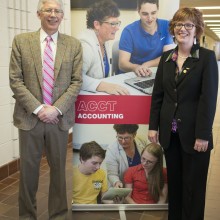
John Friedlan, PhD, CPA, CA, Associate Professor, Assistant Dean, Accounting Program Director, University of Ontario Institute of Technology (UOIT) and Maureen Piercy, President and Chief Executive ... Read More
Loyalist College Hosts Iron Accountant Competition For High School Stu...
The second annual Iron Accountant Loyalist competition will be held on Tuesday, March 4th. Organized by Loyalist Accounting students, the event is an opportunity for teams of students from area high s... Read More
Start This January at Loyalist College
Why wait until September when you can start the New Year training for a rewarding career?
January start programs at Loyalist College are an excellent opportunity to retrain, build on current creden... Read More
In the News
Belleville Intelligencer
InQuinte
Academica Group
Belleville Intelligencer
 Belleville Intelligencer