




Chemical Engineering Technician Chemical Engineering Technology
Available as a two- or three-year program
-
- Chemical Engineering Technician/Technologist
Testimonials

-
“
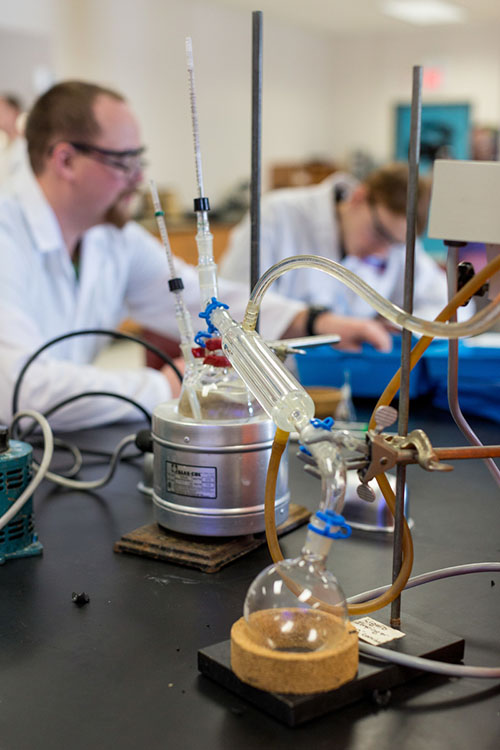
"My employers said they had interviewed many people with Bachelor’s and Master’s degrees but they liked the fact that I was able to explain to them how a distillation unit works. I actually drew a diagram in the interview."
Isabella Anwaryar
- Biotechnology Technician 2010
- Chemical Engineering Technology 2011
- Laboratory Technician, Triangle Fluid Controls Ltd.

-
“
"I got offered the job. I’m excited! Three years at Loyalist was a great time and I had the best teachers ever."
John Nguyen
- Chemical Engineering Technologist 2010
-
“
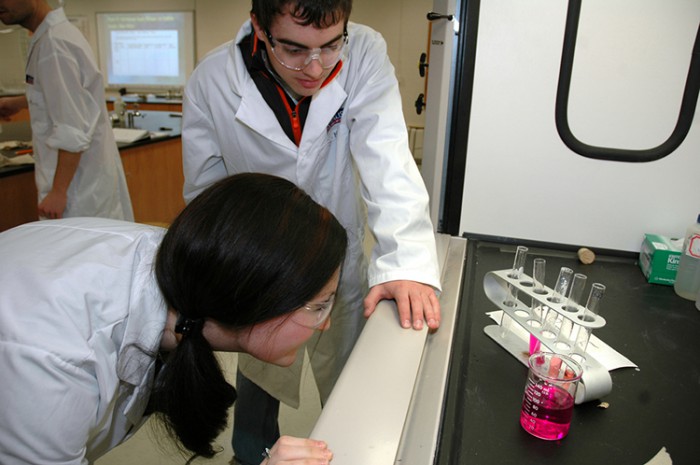
"I found myself in a friendly, laid-back atmosphere where everyone was more than willing to help me out. My favourite part of the program was that we were in the labs at least three times a week – the professors had so much practical experience that they were able to share with us."
Deirdre Wood
- Chemical Engineering Technician 2008
- Chemical Engineering Technologist 2009

-
“
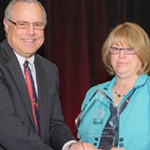
"I graduated from the Chemical Engineering Technologist program in 1975. After a brief stint in the food industry, I went to work for the paint industry at the DuPont Canada plant located in Ajax, Ontario. After working there for almost 38 years, I retired in January 2013. Last fall, I received the Industry Statesmen Award from the Canadian Paint and Coatings Association for my contributions to the industry and the association over the last 20 years. A fitting end to a long career."
Valerie Tunstall
- Chemical Engineering Technologist 1975
- Credential
Two-year Ontario College Diploma (Technician)
Three-year Ontario College Advanced Diploma (Technologist)
- Start Date
September and January entry
- Location
Belleville campus
Find your career
Chemical engineering technicians and technologists work for:
- Government agencies.
- Educational institutions.
- Industries including food production, pharmaceuticals, petroleum, plastics, pulp and paper, mining, metallurgy and nuclear energy.
Our grads get great jobs
- Plastic Industry Lab Technologist, ABC Group
- Lab Technician, Atomic Energy of Canada Ltd.
- Chemical Lab Technologist, Ontario Clean Water Agency
- Chemical Technologist, Queen’s University
- Quality Control Laboratory Technician, Durabla Canada
Is it for you?
Students who thrive in this program:
- Have a good grounding in math and science.
- Are inquisitive.
- Pay meticulous attention to detail.
Experiential learning
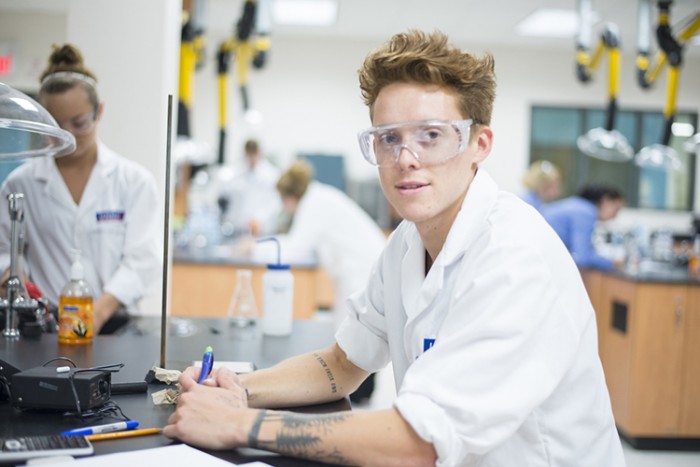
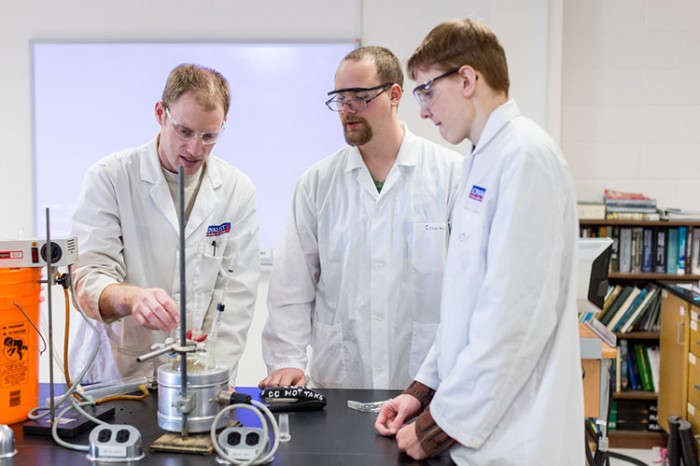
Study in the newly equipped Bay of Quinte Skills Centre:
- Understand the principles and techniques of organic and analytical chemistry, chemical engineering and industrial processes.
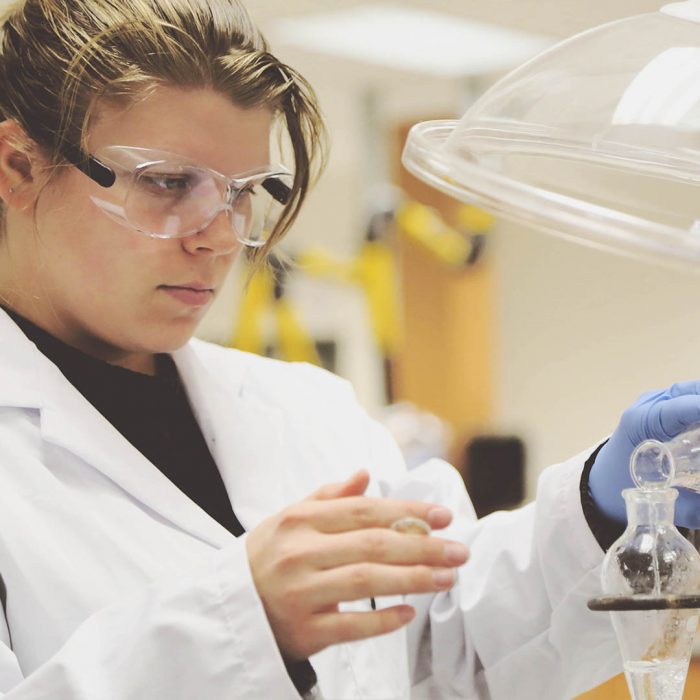
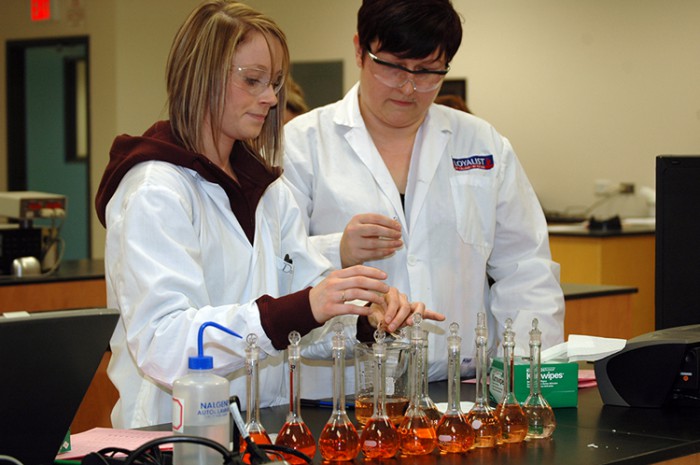
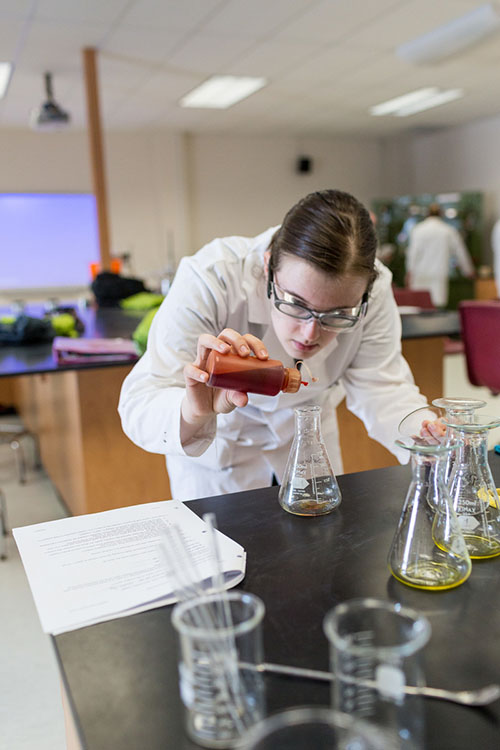
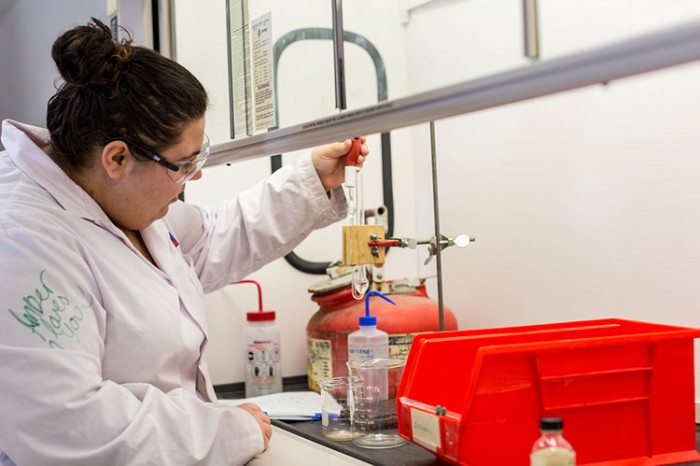
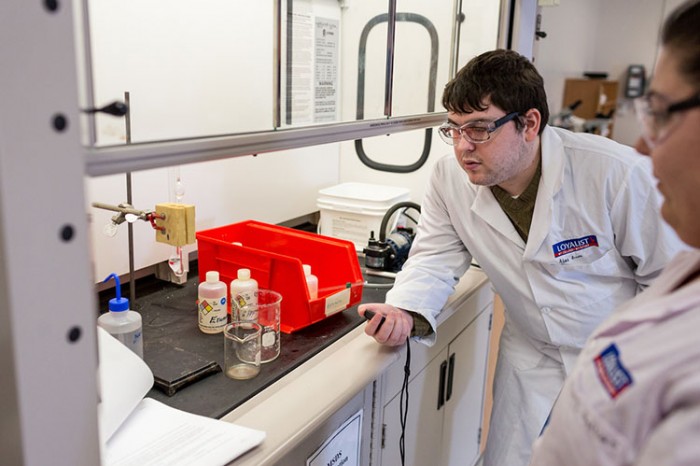
- Gain applied skills with chemical instrumentation, extraction technology, health and safety, and microbiology techniques.
- Apply theory to practice with problem-based assignments.
- Graduates are prepared to work in research and development, analyze and interpret data, manage lab operations, assess analytical methods and develop new techniques.
- Observe chemical engineers in action with tours of professional lab facilities.
- Applied project learning and field placements in the second and third years provide practical experience, preparing you for a smooth transition to the workforce with a wide range of skills.
Outstanding faculty make the difference
- Learn with active, involved instructors who are committed to students’ success.
- The teaching labs were set up by a program coordinator who brings 15 years of experience working in three different countries as a research geneticist.
Expand your opportunities in Biosciences
- Overlapping areas of study provide the option to fast-track your way to a second diploma in Biotechnology or Environmental Technician in just one more year of study.
AccessAbility Services
The AccessAbility Services team is committed to providing academic supports to students with documented disabilities. Services are free, voluntary and confidential. Given that each student’s needs are unique, services and accommodations in the academic setting are arranged on an individual basis and based on the student’s supporting documentation. Click here for a list of some of the services provided by AccessAbility Services. To register with AccessAbility Services, please complete the AccessAbility Services Application.
Courses
- First Year - Semester One
- BIOS1013 Cell Biology Lab
-
This is an introductory course focusing on the topics of cell structure and function, the flow of energy in cells, and the exchange of information in and between cells. Basic biological laboratory exercises augment theoretical material.
Co-requisite: BIOS 1012 - BIOS1012 Cell Biology Lecture
-
This is an introductory course focusing on the topics of cell structure and function, the flow of energy in cells, and the exchange of information in and between cells.
Co-requisite: BIOS 1013 - COMM1068 Communications
- This course introduces students to essential language skills to communicate clearly, concisely and correctly in written, spoken and visual form that fulfills the purpose and meets the needs of the audiences. Students reframe information, ideas and concepts using narrative, visual and symbolic representations, which demonstrate understanding.
- CHEM1019 Introduction to Applied Chemistry-Lab
- The first of two introductory laboratory classes for chemistry. This course aims to provide students with the foundational laboratory skills required to safely and efficiently work in a laboratory setting. The course will examine the proper use of simple laboratory equipment, interpreting results through mathematical calculations, and making proper laboratory observations. Laboratory exercises provide students with practical knowledge of general lab safety and standard laboratory procedures.
- CHEM1018 Introduction to Applied Chemistry-Lecture
- The first of two, this introductory chemistry course examines atomic structure, the names of the elements and their symbols, the IUPAC and common systems of nomenclature for inorganic compounds and ions, molecular weight, mole and solution concentration calculations, chemical reactions and equations. Laboratory exercises supplement the course material to provide students with practical knowledge of general lab safety and standard laboratory procedures.
- MATH1003 Mathematics for Biosciences 1
- Students learn about the engineering and scientific applications involving the following areas: the SI system for dealing with exact and approximate numbers, exponents, solving equations, determinants and linear equations, curve sketching, graphing and trigonometry.
- CHEM1001 Organic Chemistry 1
- This course is designed as an introduction to organic chemistry, with emphasis on molecular structure of the major classes of organic molecules, physical and chemical properties, and IUPAC nomenclature. Students recognize the unique properties of organic compounds, and describe practical applications of organic chemistry to everyday life and biological systems.
- BIOS1010 Sustainability
- This course focuses on understanding climate and climate change, investigating the implications of climate change, the societal and environmental impacts of a changing climate, and geoengineering solutions. Students learn about sustainability as it relates to conserving water resources, food supply, and energy production.
- First Year - Semester Two
- CHEM1016 Applied Chemistry 2-Lab
-
This course provides practical exercises to support Applied Chemistry 2 theory.
Prerequisite: CHEM 1018, CHEM 1019, MATH 1003
Co-requisite: CHEM 1015 - CHEM1015 Applied Chemistry 2-Lecture
-
Students learn principles of acids and bases, gases, chemical equilibrium, and stoichiometry. Emphasis is placed on the chemistry as it relates to disciplines within the Biosciences. This is a companion course for Applied Chemistry 2 Lab
Prerequisite: CHEM 1018, CHEM 1019, MATH 1003
Co-requisite: CHEM 1016 - CHEM1013 Applied Organic Chem Techniques
-
This course is designed as a continuation of introductory Organic Chemistry. Students learn nomenclature, structure, and physical and chemical properties of major groups of organic compounds, and differentiate among types of chemical reactions involving organic compounds. Emphasis is placed on the practical applications of organic chemistry to the biosciences and engineering. Lab exercises complement the theoretical components of the course.
Prerequisite: CHEM 1018, CHEM 1019
Co-requisite: CHEM 1017 - BIOS1004 Industrial Processes
- An introductory course designed to heighten familiarity with industrial processes via course lectures and field trips.
- BIOS1001 Introduction to Microbiology
- This course introduces microbiological theory, specifically addressing the fundamentals of microbiology, bacterial structure and function relationships, as well as technical processes to manage microbial growth, nutrition and infection. The principal divisions of the field are discussed in this course, including their relationship to biotechnological, chemical and environmental interests.
- MATH1004 Mathematics for Biosciences 2
-
This course focuses on engineering and scientific applications involving properties of exponents, logarithms and special graphing techniques. Microsoft Excel will be used.
Prerequisite: MATH 1003
- CHEM1014 Organic Chemistry 2
-
This course is designed as a continuation of concepts and applications learned in Organic Chemistry 1. Students i) learn IUPAC nomenclature, molecular structure, and physical and chemical properties of major groups of organic compounds, ii) apply principles of stereoisomerism to classification and nomenclature of compounds exhibiting chirality, and iii) differentiate among types of chemical reactions involving organic compounds. Emphasis is placed on the practical applications of organic chemistry to disciplines within the Biosciences. This is a companion course for Applied Organic Chemistry Techniques.
Prerequisite: CHEM 1001
Co-requisite: CHEM 1013 - BIOS1007 Technical Communications in Biosciences
- This course is designed to: 1) raise awareness and interest regarding the place of science in everyday life, by exploring current local and global topics affecting life on Earth, and science's place in bringing these issues to our awareness; 2) develop sound critical thinking skills through exposure to the scientific method and experimental design; 3) apply transferable skills fundamental to scientific research and communication, and 4) learn of career opportunities in science through exposure to careers of current biosciences professors and local industry leaders.
- GNED1100 Becoming a Global Changemaker
- This Loyalist College graduate attributes course will help shape your perspectives, broaden your understanding of important issues affecting our societies today, and equip you with invaluable knowledge and skills that will inform your ability to influence your community in a meaningful and impactful way. By exploring topics such as cultural competency, Indigenous education, entrepreneurship, sustainability, health and wellness, and ecological literacy, you'll be equipped with a powerful toolkit that extends far beyond the classroom.
- Second Year - Semester Three
- CHEM2010 Analytical Chemistry
-
This course provides an introduction to basic theory and calculations associated with quantitative chemical analysis.
Prerequisite: CHEM 1015, CHEM 1016, MATH 1004 - CHEM2009 Analytical Techniques
-
This course provides an introduction to some of the basic techniques and calculations associated with quantitative chemical analysis.
Prerequisite: CHEM 1015, CHEM 1016, MATH 1004 - MATH2002 Data Analysis 1
-
This course focuses on measures of central tendency, measures of variation, frequency distributions, linear regression and the normal distribution. Microsoft Excel is used to generate statistical reports and graphs.
Prerequisite: MATH 1004 - CHEM2011 Fluid Mechanics
- An introduction is provided to the basic theory and calculations related to the behaviour of fluids under both static and dynamic conditions. Students explore concepts such as hydrostatic pressure, hydraulic head, the continuity equation, and Bernoulli’s principle. They apply these concepts to calculate pipe flows, pressure drops, and size pumps as applicable to the chemical process industries.
- CHEM2006 Instrumentation 1-Lab
-
The labs performed in this course support the theory studied in CHEM 2001, Chemical Instrumentation 1.
Prerequisite: CHEM 1015, CHEM 1016, MATH 1004
- CHEM2001 Instrumentation 1-Lecture
-
This course stresses the basic concepts and techniques of chromatography (thin layer, column, gas, liquid and ion) and spectrophotometry i.e. ultraviolet (UV), Visible (Vis), Infra-red (IR), Flame and Furnace Atomic Absorption (AA), conductivity, and specific ion electrodes i.e. fluoride.
Prerequisite: CHEM 1015, CHEM 1016, MATH 1004 - BIOS2000 Microbiology
-
This applied biology course provides an introduction to microbiological theory and skills: specifically addressing microscopy, staining methods, cultivation of microorganisms, control of microbial growth, enumeration, water sanitary analysis and industrial application.
Prerequisite: BIOS 1001 - GNED General Education Elective
- General Education Courses
- Second Year - Semester Four
- CHEM2005 Analytical Chemistry 2
-
Specific types of quantitative analysis and associated calculations are stressed, i.e. Ksp and solubility of slightly soluble salts (SSS), Ka, Kb, Kw, and the pH of acidic, alkaline and buffer solutions. Basic spectrophotometry and Beer's Law are practiced and reviewed. The topics of electrochemistry, the Nerst equation and Iodine Numbers are introduced. Quantitative Analysis using Gas Chromatography, spectroscopy (UV/VIS, Flame AA, Furnace AA), potentiometric titrations and extraction techniques.
Prerequisite: CHEM 2009, CHEM 2010 - WKPL2089 Industry Research &Career Prep
- This course will provide students with exposure to a broad scope of tools that can be used to achieve their career objectives. Scenarios are used to develop research techniques to identify job opportunities in a variety of related fields in private, research, contract, and government institutions reinforced with workshops and written assignments to create resumes and cover letters and practice job interviewing competency.
- CHEM2002 Instrumentation 2
-
This course reviews some of the basic concepts and techniques of chromatography (thin layer, column, gas, liquid and ion), spectroscopy (ultraviolet-UV, Visible, Flame and Furnace Atomic Absorption). Fluorescence and Infra-red spectroscopy are introduced. A variety of sample preparation techniques are carried out as various unknowns are analysed in the labs.
Prerequisite: CHEM 2001, CHEM 2006 - CHEM2013 Polymer Chemistry
- This course introduces basic nomenclature, physical and chemical properties, classification, types and uses of the more common plastics. Other topics include theoretical aspects of the production and properties of various polymers. Typical polymer testing techniques are also discussed.
- CHEM2012 Unit Operations
- Students learn the fundamentals of mass and energy balances and apply these concepts to various unit operations commonly employed in chemical process industries. Some of the unit operations explored by students include evaporation, distillation, heat exchangers, and membrane separation.
- GNED General Education Elective
- General Education Courses
- Third Year - Semester Five
- CHEM3003 Analytical Instrumentation
-
This course deals with methods of instrumental analysis. Spectrophotometric techniques (absorption and emission) are discussed. Gas, high pressure liquid and ion chromatography are reviewed. BOD, COD and Kjeldahl determinations are introduced. Where possible, commercially available products are used as samples in the corresponding labs and different methods of sample preparation are emphasized.
Prerequisite: CHEM 2002, CHEM 2009, CHEM 2010 - BIOS3000 Biochemistry
-
This course provides a one-semester investigation of biochemistry, designed to introduce students to the complex structure of cellular components, the function of biomolecules, and the dynamics of metabolic pathways. Based on theoretical and lab-based study, students will examine major groups of biomolecules (carbohydrates, amino acids, proteins, lipids, and nucleic acids), enzyme function, metabolism and inborn errors of metabolism.
Prerequisite: CHEM 1013, CHEM 1014, CHEM 2002, MATH 2002 - MATH3000 Data Analysis 2
-
This is a course focuses on Inferential Statistics. Topics covered include the central limit theorem, discrete probability distributions, estimation (confidence intervals), chi-square distribution, analysis of variance. Microsoft Excel will be used to generate statistical reports and graphs.
Prerequisite: MATH 2002 or MATH 2012 - BIOS3001 Extraction Technology
-
This course is designed to investigate the fundamentals of extraction technology and related applications. Topics covered include liquid-liquid extraction, solid-liquid extraction, Soxhlet extraction, ultrasonic extraction, accelerated solvent extraction (ASE), microwave extraction and supercritical carbon dioxide extraction. Theory will compliment laboratory exercises.
Prerequisite: CHEM 1013, CHEM 1014
Co-requisite: CHEM 3003, MATH 3000 - CHEM3002 Organic Chemistry - Chromatography
-
This course covers the theoretical aspects of organic chemistry as applied to paper, column, thin layer, gas and liquid chromatography.
Prerequisite: CHEM 2002, CHEM 1013, CHEM 1014
- Third Year - Semester Six
- CHEM3009 Applied Projects 1
-
Students in the third year of the Loyalist College Chemical Engineering and Environmental Technology programs will undertake semester-long, project-based learning with industry or community partners to participate in the development and execution of an applied project. The objective of the collaborative applied project is to have students, as team members in a workplace setting, apply and integrate the skill sets and knowledge that form the core of their training in these programs. In this way, students will augment their academic training with valuable work experience and have an opportunity to experience alternative methods of evaluation and measures of success that are less typical of academic environments.
Prerequisite: WKPL 2032
Co-requisite: CHEM 3010 - CHEM3010 Applied Projects 2
-
Students in the third year of the Loyalist College Chemical Engineering and Environmental Technology programs will undertake semester-long, project-based learning with industry or community partners to participate in the development and execution of an applied project. The objective of the collaborative applied project is to have students, as team members in a workplace setting, apply and integrate the skill sets and knowledge that form the core of their training in these programs. In this way, students will augment their academic training with valuable work experience and have an opportunity to experience alternative methods of evaluation and measures of success that are less typical of academic environments.
Prerequisite: CHEM 3003
Co-requisite: CHEM 3009 - BIOS3004 Good Manufacturing Practices
-
This course combines Health Canada's Guidelines for Good Manufacturing Practices: Food and Drug Regulations, (as referred to Division 2, Part C of the Food and Drug Regulations) with the World Health Organization's (WHO) Basic Training Modules on GMP.
The scope of this course includes all GMP activities relating to fabricating, packaging/labelling, testing, distributing, importing and wholesaling of drugs for human or veterinary use.
Division 2 applies to drugs listed is Schedules C and D to the Act.
The course runs over a one-semester period as an online course using the Learning Management System. A facilitator will monitor participants and provide expert feedback and support.
Prerequisite: BIOS 2000, CHEM 3003, MATH 3000, BIOS 1007
*Courses subject to change.
What’s next?
Fast-track to a second diploma with just one additional year of study in:
- Biotechnology
- Environmental Technician
- Cannabis Applied Science (Post-graduate program)
Turn your diploma into a degree
Many universities across Canada and abroad will provide credit recognition for your diploma studies at Loyalist College. The following is a list of agreements that are currently in place. There are many more options, and new agreements are added annually. Contact your university of choice to make individual arrangements. Click here for more information about university transfer agreements.
Two or three-year diploma
- Algoma University – B.Sc.; B.A.; B.B.A.
- Athabasca University – B.Sc.
- Brock University – various*
- Cape Breton University – Bach. Engineering Technology Petroleum
- Carleton University – B.Sc. (Honours or General) or B.A.
- Davenport University – B.A. in General Business
- Lakehead University – Bach. of Engineering in Chemical
- Laurentian University – various*
- McMaster University – Bach. Tech. Manufacturing Engineering Tech.
- Nipissing University – various*
- Royal Roads University – B.Sc. Environmental Science or Environmental Management
- Ryerson University – various*
- Seneca College – Bach. Interdisciplinary Studies
- Trent University – B.Sc. (Honours)
- Ontario Tech University – various*
- University of Waterloo – various*
- Wilfrid Laurier University – various*
- York University – various*
- Atlantic Technological University - Year 3 BSc in Pharmaceutical Science with Drug Development
Three-year diploma
- Limerick Institute of Technology – Bachelor of Science (Honours) in Environmental and Analytical Science (Year 4)
- McMaster University – Bachelor of Technology in Manufacturing Engineering Technology
- Queen's University – various*
- Royal Roads University – B.Sc. Environmental Practice; B.A. Environmental Practice
- Trent University – B.Sc. (Honours)
- Ontario Tech University – Bachelor of Applied Science (Honours) in Nuclear Power; Commerce Bridge
- University of Windsor – various*
- Atlantic Technological University - Year 4 BSc (Hon) in Pharmaceutical Science with Drug Development
*Various potential degree pathways. Please confirm details with the receiving institution.
Study Abroad
Explore opportunities to continue your studies in Ireland:
How much will it cost?
Approximate costs (2023 – 24)
- Domestic Tuition: $2,722.08
- Full-Time Ancillary Fees:* $1,308
- Total: $4,030.08
- Additional Program Costs: $1,516 (year one)
Additional costs, such as supplies, travel and parking, may be incurred during workplace visits, etc.
*Fees related to programs that are less than or greater than two semesters will be adjusted accordingly. Fees are subject to change. Please visit the Tuition and Fees web page for a list of the many services, activities and items included within the ancillary fees, and the related policies.
Bursaries and financial assistance
Loyalist College has a number of scholarships, bursaries and academic awards available to students. Our Financial Aid Office can help you explore your options, or assist you with a student loan.
Admission requirements
Required academic preparation
- OSSD/OSSGD or equivalent with courses at the general, advanced, (C), (U) or (M) level, AND
- Grade 12 English (C) level or equivalent
OR
Recommended academic preparation
- Grade 12 Mathematics, Chemistry, and Physics at the (C), (U) or general level
- Applicants with a related degree or diploma may be considered for advanced standing or direct entry into year two
Prior learning assessment and recognition
Applicants with work experiences or other types of non-credentialed learning may be eligible for credits at Loyalist. Graded credits (as opposed to exemptions) are granted. Click here for more information about our assessment and credit challenge process.
International students
Click here for information about how to apply, international student fees and more.
Campus News
LOYALIST COLLEGE CALLS FOR APPLICATIONS FOR THE WESTON FAMILY SCHOLARS...
 Belleville, Ontario, August 2, 2018 – Loyalist College encourages prospective skilled trades students and apprentices to apply for The Weston Family Scholarship in the Skilled Trades by the deadline... Read More
LOYALIST COLLEGE TO OFFER DEGREE PROGRAMS THROUGH LIMERICK INSTITUTE O...
Belleville, Ontario, May 4, 2018 – Graduates of numerous Loyalist College two- and three-year diploma programs now have the opportunity to earn a degree in as little as one academic year through ad... Read More
LOYALIST COLLEGE RECEIVES GRANT APPROVAL FOR APPLIED RESEARCH PROJECT ...
Belleville, Ontario, November 30, 2015 —Loyalist College is pleased to announce that it has partnered with The Canadian Bioceutical Corporation on an applied research project to be developed within ... Read More
Why Wait?
It may seem like the time is never quite perfect to start a new chapter in your life. But why wait? A journey of a thousand miles begins with a single step. Loyalist College offers a variety of progra... Read More
Why Loyalist College Was the Right Choice After University
By Candace Parsons, 2014 Loyalist Environmental Technician graduate
I am a first generation student — the first member of my family to gain a post-secondary education. I am a proud University of... Read More
In the News
Leneveu finds new possibilities in plastics
Plastics News
ON CAMPUS: Chemistry with Queen’s
Belleville Intelligencer
Loyalist examining using insect powder for food
The Peterborough Examiner
