
SEPTEMBER
Two-year Ontario College Diploma
| Contact: | E-mail: |
|---|---|
| John Rosebush | jrosebus@loyalistc.on.ca |
Commercial and industrial construction provides many opportunities for supervisors and managers working locally and globally. Construction Engineering Technicians are employed as site inspectors, testing personnel, project managers, project coordinators, site supervisors, estimators, trainers, building materials salespeople, and construction schedulers. Some experienced builders use the skills gained in this program to expand into small business and be their own boss.
To be certified in Ontario, graduates must apply to the Ontario Association of Certified Engineering Technicians and Technologists (OACETT). Loyalist graduates meet all of the academic requirements for professional certification. Additional requirements include work experience, peer references, and OACETT’s Professional Practice Examination.
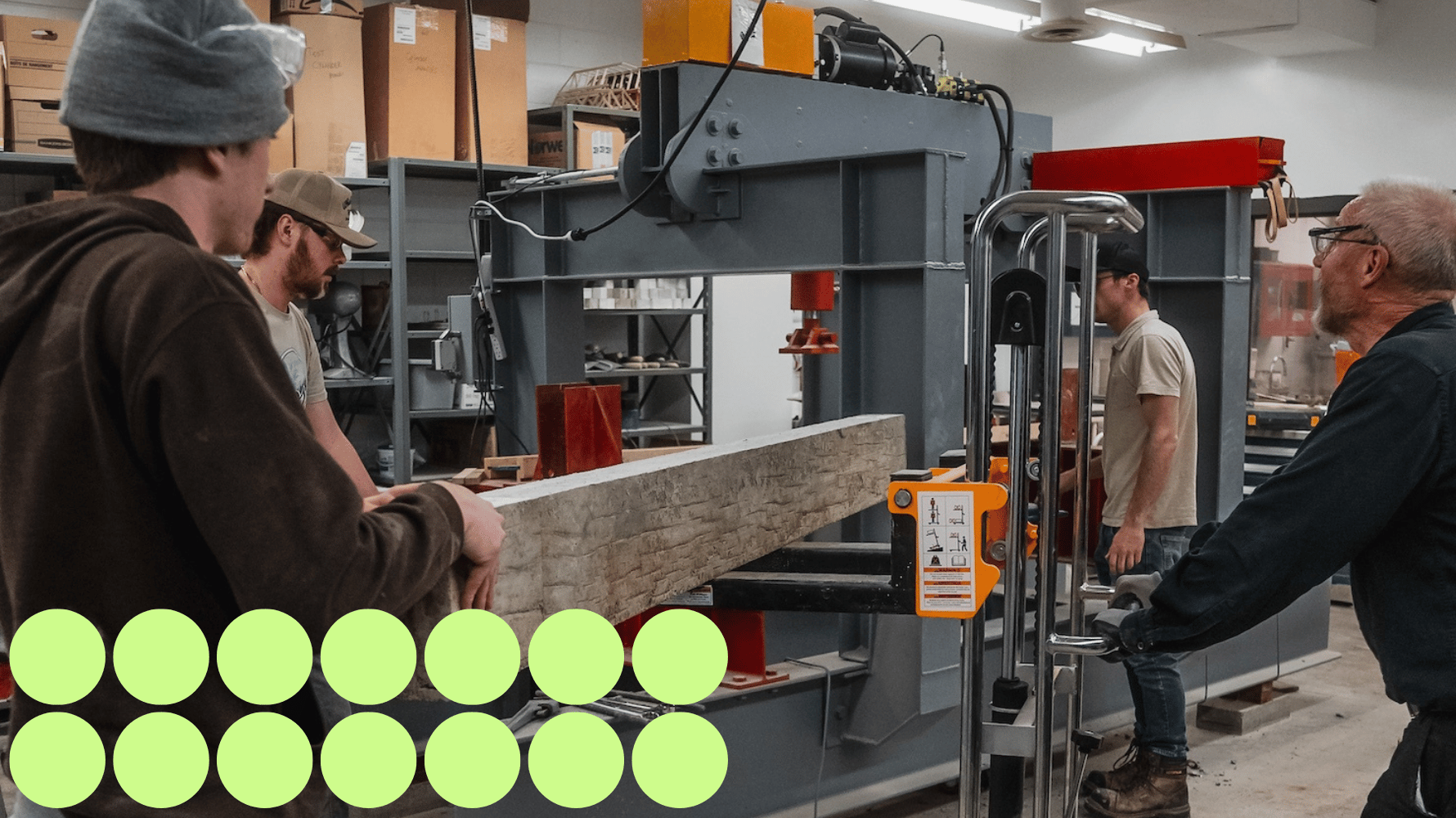
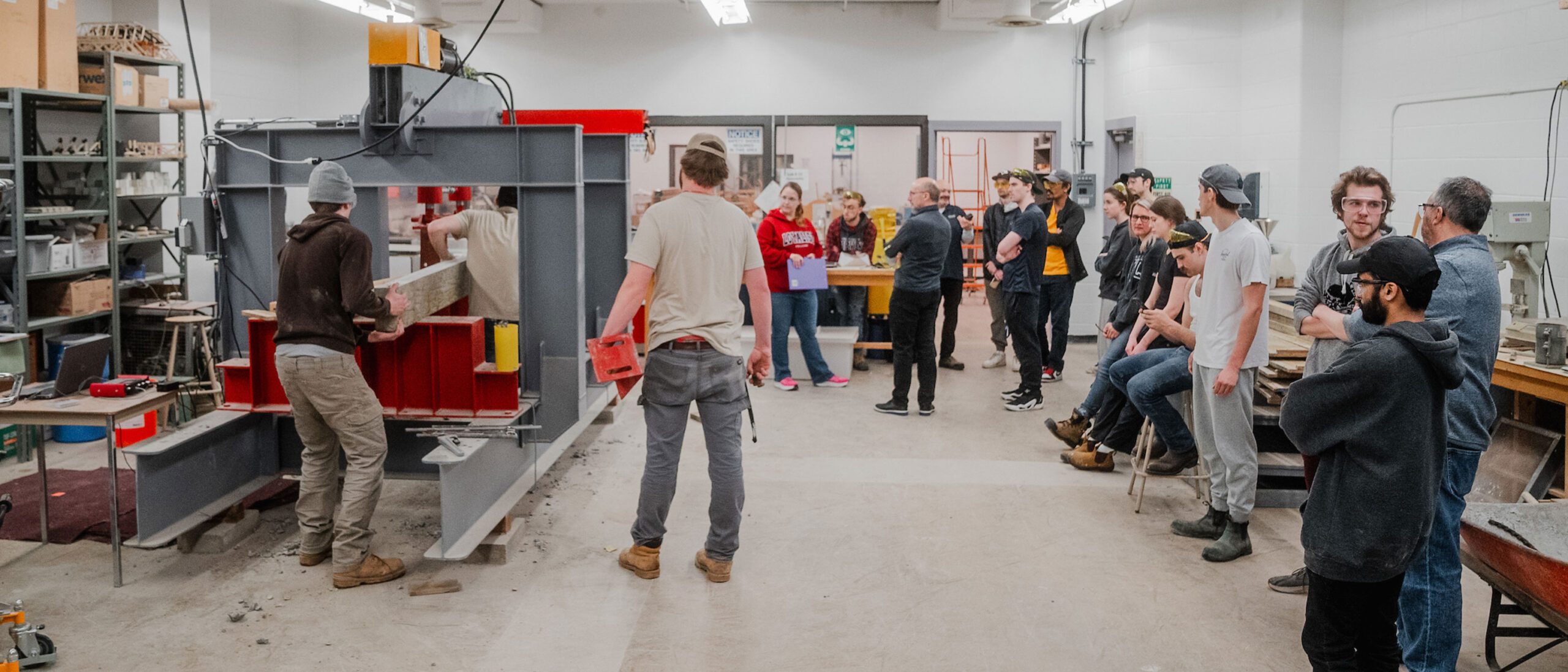
Loyalist students enjoy a lot of personal attention from faculty during classroom instruction, hands-on learning in the field, and lab work in our state-of-the-art building sciences lab. The first year provides a strong foundation in surveying and drafting principles and computer applications including AutoCAD. A common curriculum allows easy transfer to the second year of a diploma in Civil Engineering Technician/Technology. With the completion of additional courses, students can also transfer to the Survey Engineering Technician program.
In their third semester, students gain specialized knowledge of structural drafting, soil and materials testing, estimating, cost control, construction management and supervision. Graduates are prepared to assume responsibility for their work, with a sound understanding of applicable laws, due diligence practices, labour-management principles, and health and safety practices.
Tuition/Ancillary Fees: $3,096 (two semesters)
Consumables Fee: $60
Books and Supplies: $1,200
Required academic preparation –
OR
Turn your diploma into a degree. Credit transfer agreements are in place with the following institutions as of September 2009:
Click here for details and minimum requirements. Graduates may contact the university of their choice to make individual arrangements. Informal agreements are in place with other institutions and new transfer agreements are added annually.
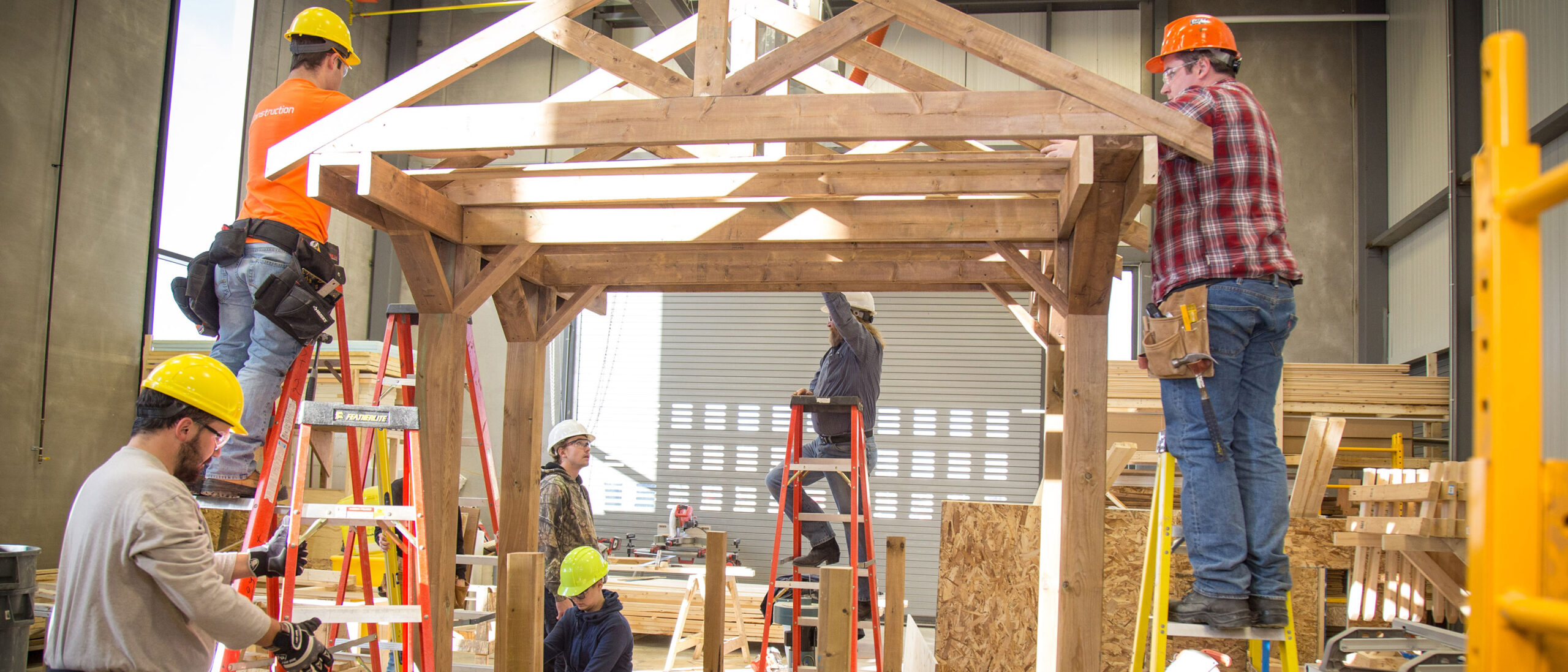
This course deals with materials used in buildings, and the methods and equipment used in constructing with these materials. Materials include: concrete, masonry, wood and steel.
This course introduces students to the principles involved in reading, understanding, and creating construction drawings in a computerized environment using AutoCAD software.
Develops communication skills for the presentation of technical information in business documents that meet the needs of clients and customers. Documents and presentations are produced in Word and PowerPoint.
Students learn to use the mathematical tools that are required in their engineering subjects. Building sciences applications of algebra, geometry and trigonometry are emphasized.
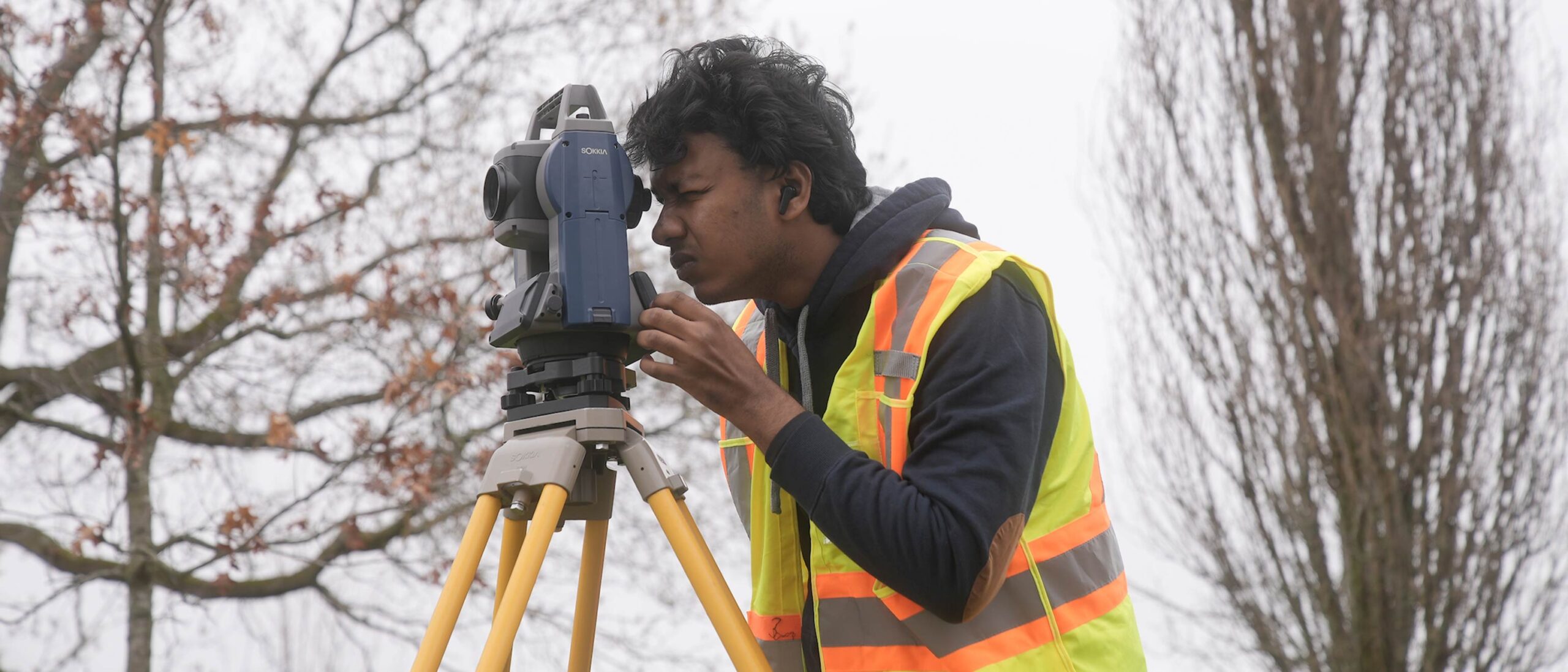
This is an introductory course in surveying. Basic principles are applied to level, distance, and Theodolite field exercises. Calculations and drafting relating to field work are part of this course.
This course deals with the effects of external forces on rigid bodies at rest. The first half of the course concentrates on forces and equilibrium. The second half deals with applications of basic principles to specific structural shapes (trusses, beams). Prerequisite: MATH 1012
This course deals with materials used in civil engineering works, and the methods and equipment used in construction with these materials. Materials include: soils, concrete, steel, heavy timber, and asphalt. Prerequisite: BLDG 1005
Principles of sound, heat, vapor transmission and light; their application to subjects such as acoustics, insulation, moisture protection, natural and artificial lighting; the establishment of selection criteria; fundamentals of fire, corrosion, expansion and durability, including assessment through materials testing; the role of standards publishing agencies and the relationships to codes and standards.
A continuation of CAD 1, learning techniques of text, blocks, and dimensions. An introduction to isometric and 3D views, utility functions and customized menus. Prerequisite: CADD 1004
Students are introduced to Microsoft Office software. The basics of Microsoft Word are learned and Microsoft Excel is used with engineering applications.
This is a continuation of Mathematics 1. Prerequisite: MATH 1012
Level, stadia, topographic and construction survey methods are covered. The development of profiles, cross-sectioning for contour, the placing of grade stakes and batterboards, and circular curves are studied. Drafting and calculations associated with these surveys are performed. Prerequisites: MATH 1012 & SURV 1000
Students learn the general requirements for structural steel design drawings and shop detail drawings. Drawing projects will include beam shop details and bracing details. Prerequisite: BLDG 1003 & BLDG 1004
Concepts of stress,strain, shear, tension, compression and material properties as they relate to materials commonly used in the building industry.
Student obtains hands-on experience in a materials testing laboratory setting, and becomes familiar with the mechanical properties of construction materials using CSA/ASTM standard test methods. Prerequisite: BLDG 1003 & 1004 Corequisite: BLDG 2005
A study of plumbing (water supply, sewage disposal, site drainage), mechanical (heating, ventilating, air conditioning), and electrical systems related to building design and construction.
A study of the role of the construction superintendent with special emphasis on leadership, labour relations, construction management and safety.
TBA
The emphasis in this course is construction layout. A number of projects involving layout of buildings, sewers and roads are done using traditional and modern methods and equipment. Prerequisite: SURV 1001
An introduction to foundation engineering and the investigation and evaluation of subsurface conditions in order to select the most suitable type of foundation. The basics of soil mechanics are studied in relationship to foundation engineering and the use of soil as a construction material.
The student studies the primary types of structures and their component elements, dead and live loads, which can be applied to a structure. Using limit state design concepts, loads acting on members are determined, and structural elements sized. Prerequisite: BLDG 2004 & BLDG 2005
Students study the various forms of contracts used in the construction industry. The style, purpose and method of writing specifications is studied. Using the contract, specifications and drawings, students prepare estimates of quantities of materials and construction costs for residential and industrial buildings. Prerequisite: MATH 1002 or MATH 1012
A continuation of Materials Testing 1. Prerequisite: BLDG 2008
A continuation of Construction Supervision 1. Prerequisite: BLDG 3006
This course will be a careful examination of the process of entrepreneurship. Students examine various sources of collective wisdom and experience of many small business owners, and the characteristics and attitudes necessary to be a successful entrepreneur.