SEPTEMBER
Two-Year Ontario College Diploma
| Contact: | E-mail: |
|---|---|
| John Poste | jposte@loyalistc.on.ca |
This program prepares graduates for the many and varied tasks that make up the growing field of manufacturing engineering. Graduates are employed as maintenance planners, performance lab coordinators, design verification technicians, and CNC programmers in a variety of industries from huge machine shops to large manufacturing, design/build facilities and food processing.
Programmable Logic Controllers (PLCs) make it possible for technicians at a computer to control events on the factory floor. To succeed in today’s industrial environment, graduates need a combination of mechanical and electronic expertise. Loyalist is meeting that need, giving graduates strong skills and knowledge of CAD, machine design, motion control and manufacturing principles.
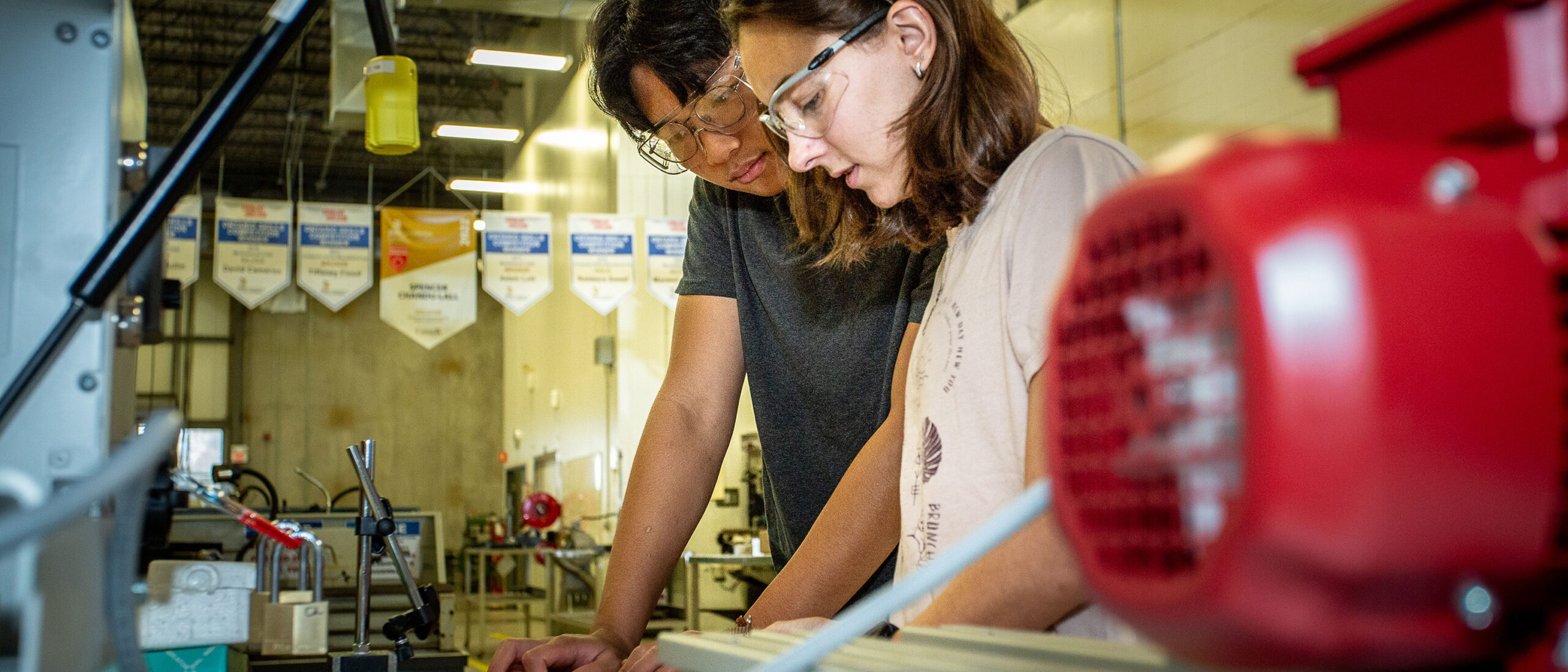
Detail-oriented students who enjoy using computers will find many opportunities for computer-based design, including AutoCAD, PLC programming, Autodesk Inventor (CAD-based mechanical design) and CADCAM. Students will also gain a solid understanding of machine design, tool control and development, numerical control programming and statistical quality control. The positive learning environment includes well-lit, roomy labs with a new CNC turning machine, lathes and design simulation software.
Students who successfully complete the first year of the program will also be awarded a certificate in Mechanical Techniques.
Tuition/Ancillary Fees: $3,096 (two semesters)
Books and Supplies: $1,450
(a) Required academic preparation –
OR
Recommended academic preparation –
Turn your diploma into a degree. Credit transfer agreements are in place with the following institutions as of September 2009:
Click here for details and minimum requirements. Graduates may contact the university of their choice to make individual arrangements. Informal agreements are in place with other institutions and new transfer agreements are added annually.
Students are introduced to Microsoft Office software. The basics of Microsoft Word are learned and Microsoft Excel is used with engineering applications.
To provide the student with a knowledge of AC electrical circuit fundamentals, control devices and wiring methods.
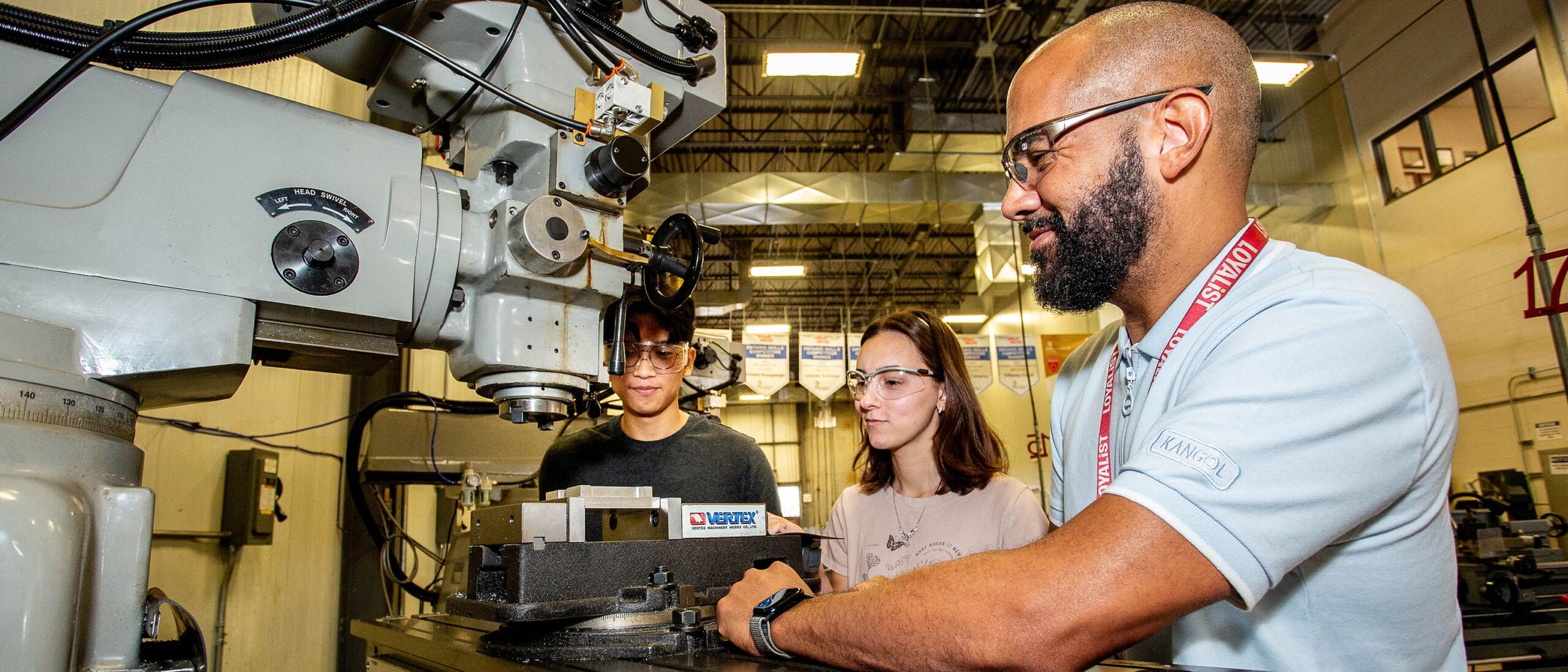
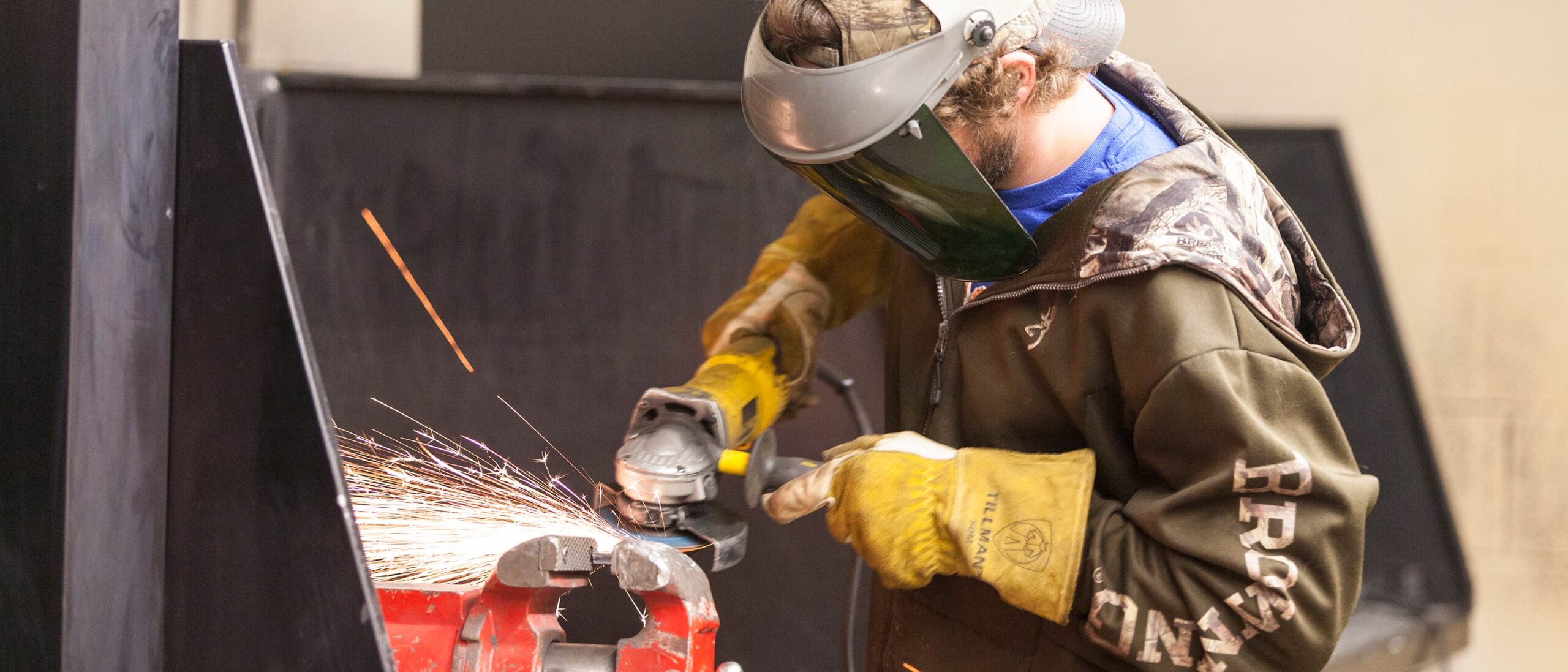
The student will learn the basics of metal cutting using various machine shop tools including engine lathes, milling machines, drill presses, grinders, as well as various hand tools. Shop safety aspects and principles of metal cutting are discussed.
An introduction to the theory and practice of welding to give the student a strong background in the various fabrication processes. Oxyacetylene welding, brazing, cutting, MIG, arc welding and TIC welding will be covered.
In this course students develop a clear understanding of the basic concepts of fluid power control systems. Students learn about the application of equipment such as pumps, actuators and control valves in detail, and develop a logical approach to the solution of fluid power control system design. Extensive hands-on labs reinforce the theoretical principles of fluid power.
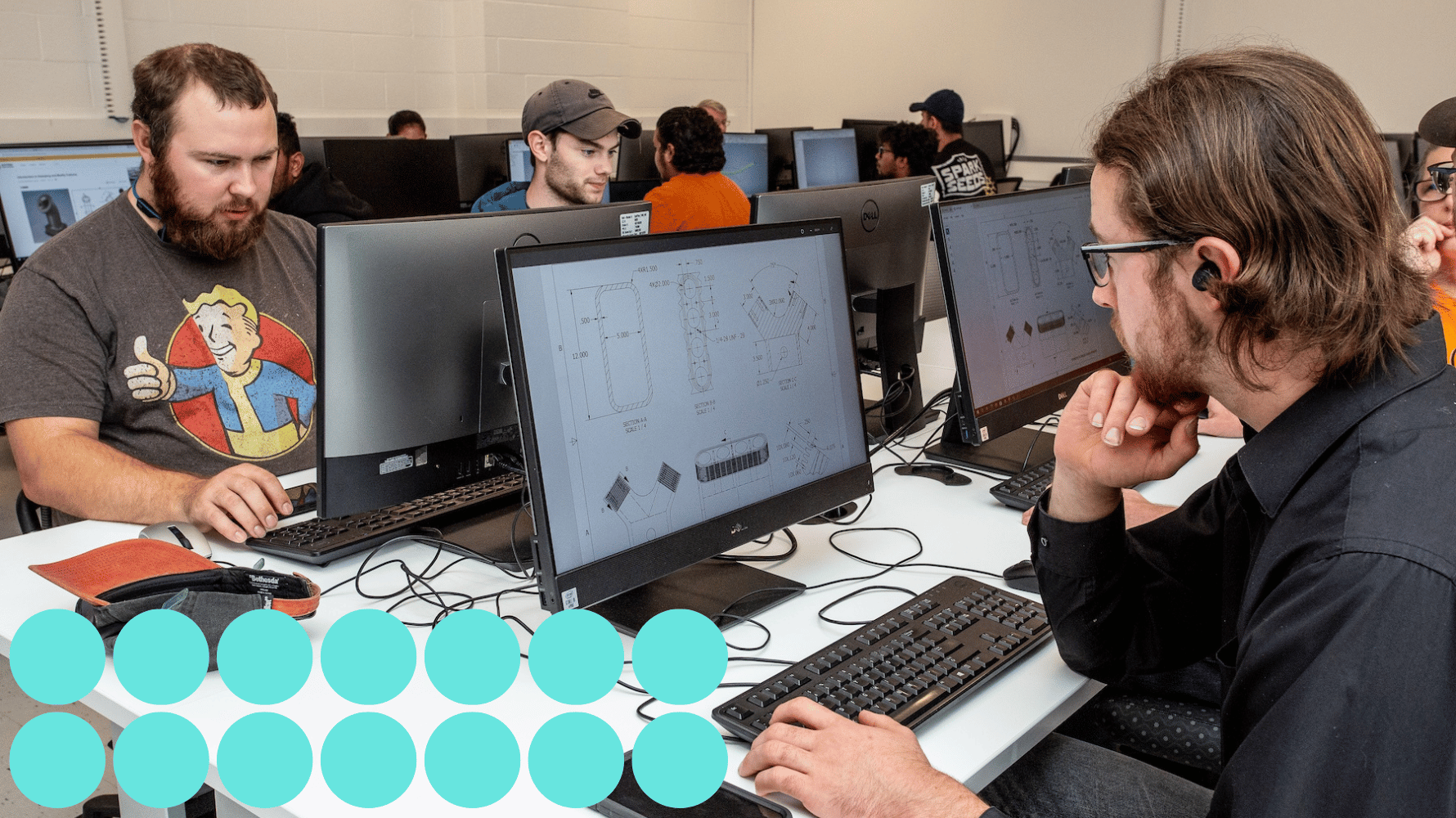
This course covers the theory, conventions, standards and procedures associated with the preparation of mechanical drawings. Orthographic drawings, pictorial drawings, sectional views, auxiliary views and principles of dimensioning are discussed to help students develop the skills to properly read blueprints. The course also introduces the student to computer aided design using AutoCAD.
In this course students demonstrate basic analytical skills and they are prepared for further studies in mathematics. Topics include the use of calculators, basic number operations, basic algebraic operations, functions, percentages, inequalities, units and measurement and solving word problems.
Introduction to standard practices used in the inspection, dismantling and replacement of components such as bearings, chain and belt drives, and couplings.
An introduction to oxy-acetylene welding, brazing and cutting and to MIG and arc welding.
This is a continuation of Computer Applications 1, where students further enhance their skills with software applications such as Word, Excel and PowerPoint. Prerequisite: COMP 1007
This is a continuation of the first semester course with applications of AC theory to the installation and maintenance of motors and control systems.
In this course the students will be introduced to a variety of manufacturing processes that are used for metallic and non-metallic products. Topics include casting, forming, non-traditional machining processes, and powder metallurgy.
A continuation of Fluid Power 1.
Students consolidate the skills in arithmetic, algebra, solving quadratic and higher order equations and geometry, trigonometry, and graphical analysis to solve problems used the technology applications. An introduction to statistics is also provided to prepare the student for further work in statistical quality control. Prerequisite: MATH 1014
The interpretation of installation, assembly and detail drawings as applied to the maintenance trade. Prerequisite: MANU 1002
The application of turning, milling and grinding procedures to the repair of machine parts. Prerequisite: MANU 1000
A continuation of Machine Maintenance as applied to air compressors, pumps, speed reducers and machine tools. Prerequisite: MECH 1001
The application of standard welding processes to the repair and fabrication problems encountered in maintenance shops. Prerequisite: MECH 1002
A continuation of Welding Theory 1. Prerequisite: MECH 1009
This is a continuation of CAD 2 where more advanced techniques are introduced. Students also learn to generate solids and wire from images using AutoCD and CADkey software. Prerequisite: CADD 1007
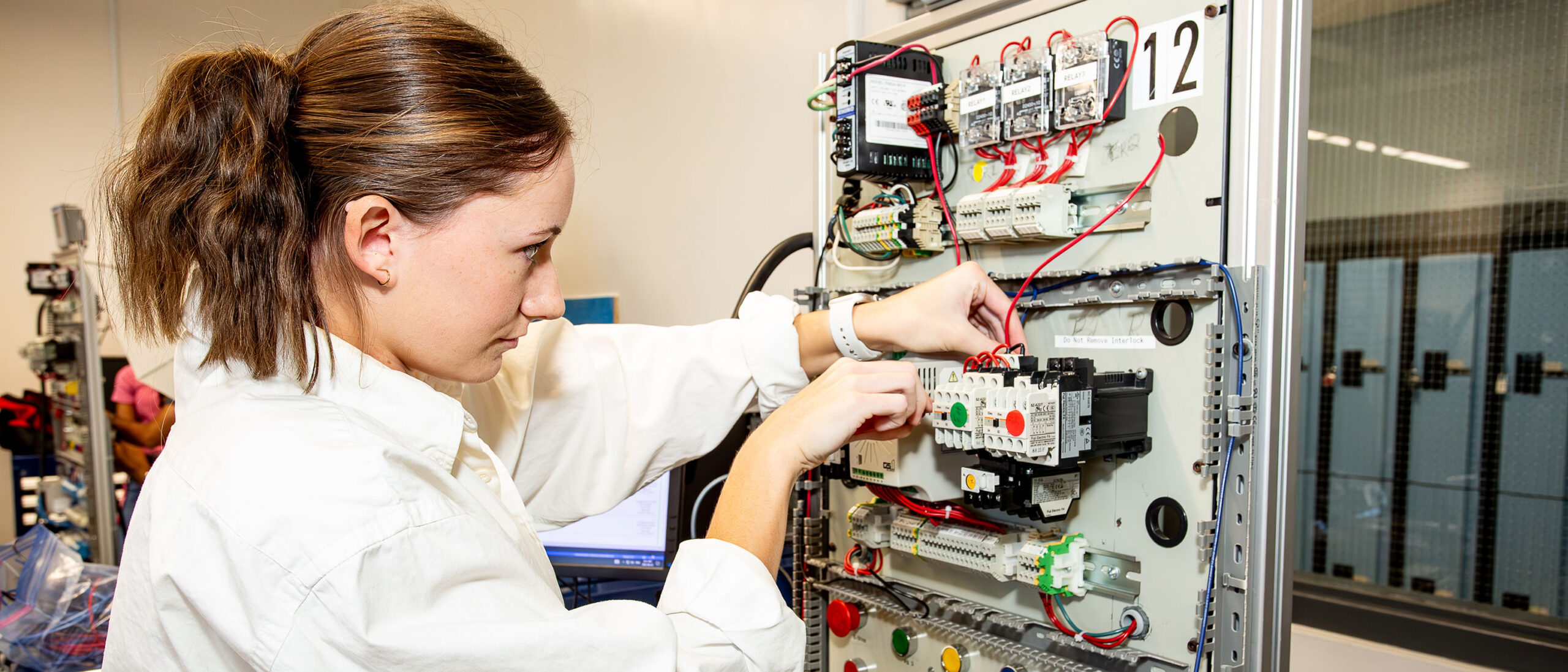
Programming, interfacing, applications and troubleshooting of programmable controllers is studied. Emphasis is on hands-on learning and solutions to problems in industrial automation systems. Prerequisite: MATH 2004 or ELEC 3003
Production Systems and Industrial Drawings. This course is intended to acquaint the student with the functions of production management as it applies to maintenance. Topics covered include: the TPM System (Totally Productive Maintenance) and the basics of Project Management as it relates to Electrical. It will cover Estimating both time and Materials.
The aim of this course is to show how and where ferrous and non-ferrous metals can be effectively and economically used. It comprises a study of the main properties, general composition, supply and methods of heat treatment. Ceramics, composites and other non-metallic materials are also discussed.
The objective of this course is to provide the student with the foundation of NC programming for turning and machining centers. The students will use computer aided methods to create NC programs and run the machine tools to produce a variety of components.
Students will learn how probability and statistics are applied to quality control as related to receiving and process control in manufacturing including how to sue and interpret various control charts for variables and control charts for attributes and sampling techniques. Other topics include process capability studies and improvement techniques such as Pareto diagrams and cause-and-effect diagrams.
This is a continuation of CNC machining where students will learn to utilize computer design and manufacturing software such as CADkey and MasterCAM to produce a variety of complex components. Prerequisite: CADD 2002
This is a continuation of CAD 3 with emphasis on solids design and assembly drawings using primarily CADkey. Prerequisite: CADD 2002
An introduction to computer-assisted jig and fixture design for quantity production. Topics include process planning, work locating and holding principles and the design of basic tools.
The objective of this course is to provide the concepts and procedures required to design and select common machine elements, such as bearings, gears, belts, chains, etc. found in mechanical devices and systems.
This course involves the principles learned in previous courses, such as PLCs, pneumatics, CNC, and computer aided manufacturing, whereas the students will apply these principles to complete various projects. Prerequisite: MANU 2003