
SEPTEMBER AND JANUARY
Two-Year Ontario College Diploma
| Contact: | E-mail: |
|---|---|
| Dierdre Way, Year One Coordinator | dway@loyalistc.on.ca |
| Cecelia Reilly, Year Two Coordinator | creilly@loyalistc.on.ca |
Graduates are eligible to apply for entry-level positions with municipal and regional police services, Ontario Provincial Police (OPP), Military Police, RCMP and related law enforcement agencies.
Before police recruits can be hired in Ontario, applicants must undergo provincial aptitude testing. Components include physical fitness, visual acuity, psychological and written examinations, as well as a police background check. The Loyalist Police Foundations program specifically prepares graduates for both Physical Readiness Evaluation for Police (PREP) testing and the Ontario Association of Chiefs of Police (OACP) Certificate required by most police services. Recruits attend post-hire training at the Ontario Police College.
Policing is an intellectually and physically challenging profession. Police officers work with the community to achieve public safety through crime prevention, law enforcement and public education. Candidates should demonstrate community involvement and a commitment to working with people of all backgrounds and cultures.
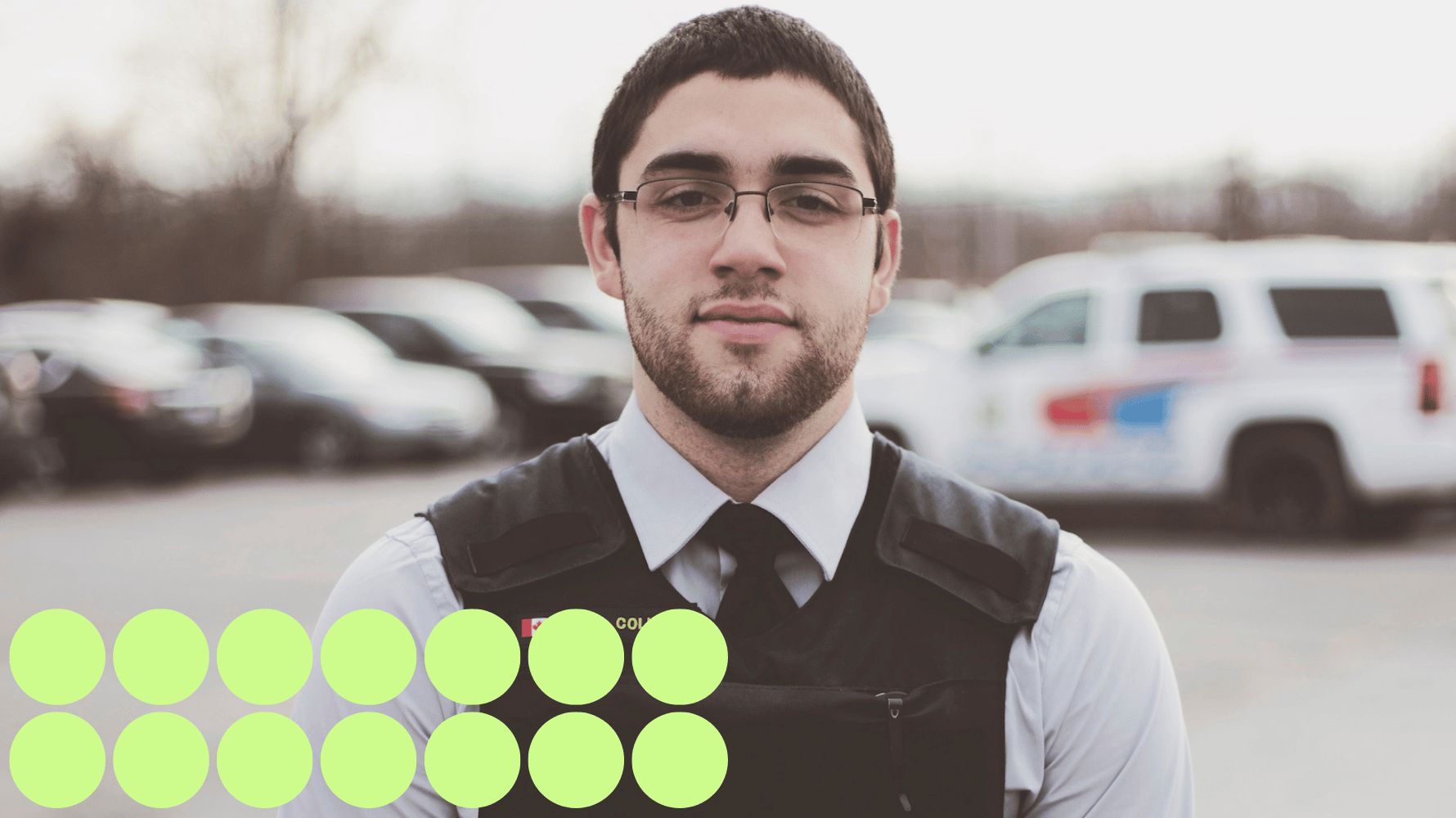
During a common first year, students focus on the justice system and insight into human behaviour. They also develop essential career skills in ethical decision-making, computers and communications. Second year studies specialize in interpreting and applying the law. Students develop confidence through academic studies, hands-on techniques and two field placements. Personal safety and respect for victims are emphasized throughout. The program teaches to the most rigorous physical fitness standard used in any hiring process, preparing Loyalist graduates to place among the top tier of applicants in this competitive field.
After Year One, students who wish to transfer to another Justice Studies program can apply directly to Year Two of Community and Justice Services Worker, Investigation and Protection Studies, Customs Border Services, or Paralegal.
Tuition/Fees: $2,953 (two semesters)
Books and Supplies: $1,240
Relocation and travel may be required for work placement
(practicum) experience.
(a) Required academic preparation –
OR
Recommended academic preparation –
(b) Academic – Year Two
To be admitted to Year Two, applicants must successfully complete all first year (or equivalent) courses and meet the following criteria:
(c) Transfer to Another Justice Studies Program: Students who, at the end of Year One, wish to be considered for admission to another Justice Studies program including Community and Justice Services Worker, Corporate and Commercial Security, Customs and Immigration, or Paralegal, are encouraged to discuss this with their program coordinator.
(d) Transfer of Credit: Applicants with prior education equivalent to Year One (from university and/or college) normally will be admitted directly to Year Two. Applicants seeking advanced standing must review their qualifications with the program coordinator.
(e) Police Background Check: In order to participate in the field placement in Year Two, students will be required to complete a criminal record check and police background check by their local police service. Some applicants may not be eligible for the required field placement.
(f) Health: A personal health history form must be completed prior to registration. Applicants with special needs or limitations which may affect their potential employment are encouraged to discuss their program and career goals with the coordinator prior to enrollment.
(g) CPR and First Aid: Prior to Year Two, students are required to show proof of current CPR certification – Basic Cardiac Life Support (BCLS), Level C, as well as a Standard First Aid Certificate.
(h) Volunteer and Work Experience: These types of experiences are viewed positively when being considered for Year Two and by police services.
Turn your diploma into a degree. Credit transfer agreements are in place with the following institutions as of September 2008:
Click here for details and minimum requirements. Graduates may contact the university of their choice to make individual arrangements. Informal agreements are in place with other institutions and new transfer agreements are added annually.
This course will enable the successful student to communicate effectively in writing, incorporating correct use of basic grammar, spelling, punctuation, and sentence construction.
This course provides beginner level computer users with more advanced instruction, including introduction to computers, electronic mail, internet software, wordprocessing, spreadsheet and database. Through practical lab experience, the learner will become more efficient operating current workplace software applications.
This course will provide first semester students with information, skills, and strategies that will enhance their chances for academic success. Orientation to the Centre for Justice Studies and Loyalist College facilities and resources is included.
This course will introduce students to the incidence and impact of Canada's leading diseases. The student will develop an understanding of wellness concepts, and practical strategies for developing a healthy lifestyle. Students will study and implement prerequisites for developing and maintaining personal physical fitness programs. The student will develop and implement personal strategies to meet fitness standards required by the various justice agencies.
This course focuses on ethical issues faced by individuals in their personal lives, as citizens, and as professionals. Students will analyze and clarify their values and learn the basics of moral reasoning and ethical behavior. Moral theories and professional codes are examined. Students will apply ethical decision making models to personal and professional dilemmas.
This introductory course provides the student with an overview of the Canadian Criminal Justice System with a particular emphasis on the history, function, role and organization of Canadian law enforcement services. The operation of the criminal justice system will be examined and analyzed in light of contemporary issues affecting the system. Each of the major components from enforcement through the courts and correctional services will be explored.
An introductory course in which various concepts and sociological theories are presented. The sociological topics include the historical development of sociology, sociological theories, research methods, culture, socialization, race and ethnicity, and the study of aboriginal peoples of Canada.
This course will explore the structure and administration of community organizations and social services that operate within and adjacent to the Criminal Justice System. The course will further explore the issues, trends and legislation that impact on community social services.
This course emphasizes improvement in basic Communications skills.
Writing styles, editing, and different approaches to writing are
taught.
Prerequisite: COMM 1011
In this introductory level course, students learn to apply knowledge from interpersonal relations and group dynamics to working in a team. Emphasis will be placed on developing awareness of one's self to enhance effective communications individuals and groups.
Students will explore the organizational structures of the various agencies both public and private that relate to the wide variety of careers in the field of Justice services. The students will then examine the roles, functions and specific careers within Police Services, Customs, Corporate and Commercial Security, Corrections and the Paralegal field.
This course is aimed at developing successful students. This curriculum will cover a number of topics, such as time management, learning styles, test taking, note taking, reading comprehension, and health and wellness and learning, but will also be developed throughout the course in consultation with the students.
A continuation of Lifestyle Management and Fitness 1 combined with the introduction of the nutritional and psychological continuums of wellness. Emphasis will be placed on the development of personal programs. There will be both theoretical and physical fitness evaluations. Prerequisite: FITN 1000
This course is designed to take the student from the origins of Canadian law, its roles and various components to the substantive aspects of civil, family, administrative and criminal law.
This course is designed to introduce the student to the most important political institutions in Canada and to provide a better understanding of the issues that have united and divided the country. The law-making process at the various levels of government will be examined and issues related to the enactment of contemporary legislation will be addressed. Students will explore the organization and administrative function of Government as it relates to the various justice fields of study.
In this introductory level course, students will study the basics of psychology, its concepts and theories including: the historical development of psychology, biological bases of behavior, learning and memory, perception and consciousness, motivation, lifespan and personality development, and abnormal behavior.
A continuation of Sociology and Canadian Society which will focus on a variety of social problems in Canadian society. The social issues will include: addiction, social stratification, minorities, race and ethnicity, education, workplace, gender issues, media and health issues, and the family. Each issue is looked at in detail including the history of the problem and what society is doing to deal with the issue. Prerequisite: SOCI 1003
This course emphasizes improvement in basic Communications skills. Writing styles, editing, and different approaches to writing are taught.
Through lectures, group associations, practical experience and self-evaluation, students will explore such issues as preparation and prerequisites for fitness, the impact of a police officer's image on public perception, a comparison of his/her lifestyle management profiles to the profiles of active police officers, concerns for health and fitness with law enforcement agencies, principles of exercise/training methods, individualized program design and implementation, athletic injuries and risks of physical fitness training. This course also includes intensive physical training. The student will develop the strategies necessary to develop, design, and implement an effective personal fitness program and be able to meet the standards for the Constable Selection process.
Enables the student to explain and analyze the historical, philosophical and contemporary application of statutes affecting youth in conflict with the law. Examines and analyzes the Youth Criminal Justice Act (2003) and other relevant legislation, the detention, interviewing and processing through the court structure of young offenders. The ability to summarize and appraise disposition alternatives with a view to aiding and rehabilitating a young offender while facilitating public safety and victim response is developed. Prerequisites: LAWS 1004 & SOCI 1004
In this course students will analyze specific elements of selected criminal code offences. These include offences against the person, property and public order. Students will research case law and assess its impact on criminal offences and use case law to argue or defend decisions.
Examines pertinent sections of the Canadian Charter of Rights and Freedoms, and their impact on Canadian criminal procedure. Citizen and police arrest, release authorities, police powers of search and seizure, with and without warrant, and its implications. Students become familiar with police terminology and how to apply the procedures required to affect arrest and release. Prerequisite: LAWS 1004
This course provides an examination of various theoretical explanations of criminal and deviant behavior including the sociological, biological and psychological perspectives.
Examine the requirements of a criminal investigation from the crime scene, to interviewing skills necessary to retrieve information from victims, witnesses and suspects, the use of forensics, the care and handling of evidence, rules of evidence and other issues related to the collection and presentation of evidence in court.
Introduction to theory and models of community policing. Problem-solving methods and alternative dispute resolution strategies are examined. Students will explore issues relating to public relations, crime prevention and the role of the community in policing. Students will become familiar with strategies and elements of volunteerism.
Students complete a minimum of three weeks of field placement with a police service.
This course will utilize the skills developed in previous Communications courses allowing the student to write professional reports, business letters, and memos. Prerequisites: COMM 1010; COMM 1011; COMM 2001
First Nations Peoples This course will increase knowledge and awareness of aboriginal peoples in Canada, and in particular people of the Iroquois nations; where they are coming from historically, culturally and in their traditional world views. Contemporary legal and social issues will also be explored in detail.
Preparation for employment by identifying prospective employers, relevant employment skills, preparing effective resumes, and completing an employment interview simulation.
A continuation of Lifestyle Management & Fitness 3, with emphasis on preparing and testing the student with a variety of physical test batteries. The student will develop and implement personal programs for physical training to help her/him meet the minimum fitness standards. The student will acquire extensive knowledge about sleep, and the detrimental effects of sleep debt on his/her health.
Analyzes elements of offences related to weapons and the Firearms Act, and the Controlled Drugs and Substances Act. Provisions of other federal statutes and their relationship with the Criminal Code are examined. Prerequisite: LAWS 2005
Examines scenarios and determines the appropriate enforcement action for the most common provincial statutes, including arrest, search and seizure authorities, common offences and the involvement of non-police agencies. Statutes examined are: Provincial Offences Act, Highway Traffic Act, Mental Health Act, Landlord Tenant Act, Trespass to Property Act, Coroners Act, Family Law Act, the Blind Persons Act and Game and Fish Act. Prerequisite: LAWS 1004
Focuses on police governance and accountability. Issues related to the Police Services Act, police complaints, First Nations policing and management, and labour issues, are examined. Use of force, theory law and other legal issues related to the use of force are discussed. Students also examine theory related to officer safety issues. Prerequisite: POLI 2000ice Studies DivisionCourse Attributes:Police Foundations
Through placement experience with a police service the student demonstrates achievement of the program outcomes.
The first part of this course is designed to teach the skills and techniques of non-violent crisis intervention to the justice studies student. This is a hands-on experiential course where the required skill will be taught through role-plays and didactic exercises. Students will learn how to respond appropriately to defuse the anger and/or frustration in the disruptive individual. The student is able to receive certification from the Crisis Prevention Institution. The remainder of this course is an applied course in conflict resolution with an emphasis on mediation and negotiation. Prerequisites: PSYC 1003 and SOCI 1004
The study of abnormal behavior including non-psychotic disorders, psychosis, schizophrenia, drug addiction and psychopathology and analysis of abnormal behavior from a psychological perspective.