SEPTEMBER
Two-year Ontario College Diploma
| Contact: | E-mail: |
|---|---|
| Gail Orr | gorr@loyalistc.on.ca |
| Lisa Woodcock | lwoodcock@loyalistc.on.ca |
Registered Practical Nurses are integral members of the health care team. They independently provide a full range of nursing care for clients within their scope of practice.
RPNs work in hospitals with post-surgical, maternity, pediatric, cardiovascular, oncology (cancer), and psychiatric patients. They are employed in rehabilitation centres, doctors’ offices, community agencies, and in leadership positions in retirement homes and long-term care facilities. RPNs also promote community health and disease prevention through public health units, schools, workplace wellness programs, family planning and baby wellness clinics.
In March 2009, Loyalist College received a Category 1, fiveyear program approval, the highest attainable rating, from the College of Nurses of Ontario (CNO).
The two-year, five-semester, program combines classroom theory, lab work and clinical practice. Students learn to assess clients’ health throughout the lifespan, and to plan, implement and evaluate appropriate nursing care. Instruction takes place in small clinical groups under the supervision of an experienced faculty member, who guides their students’practice throughout each semester.
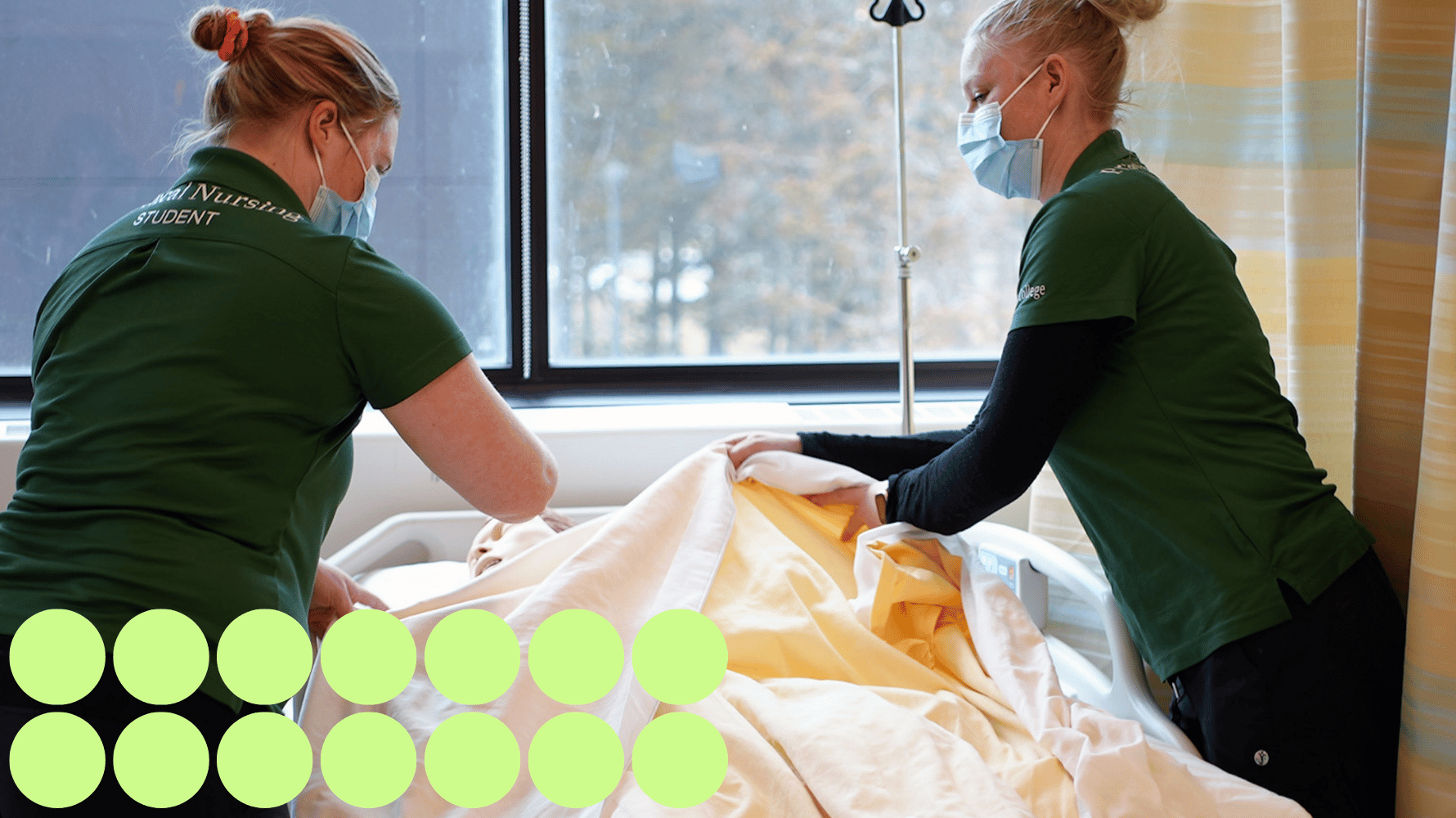
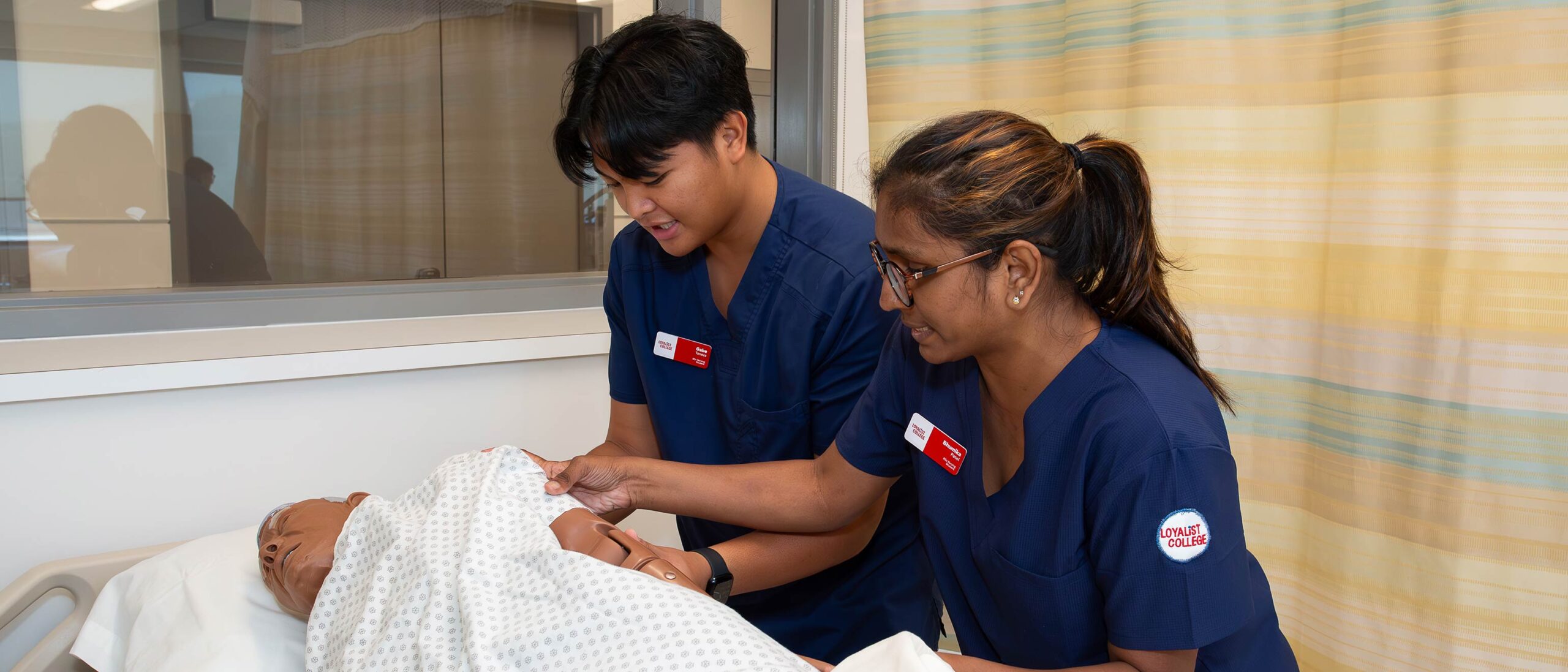
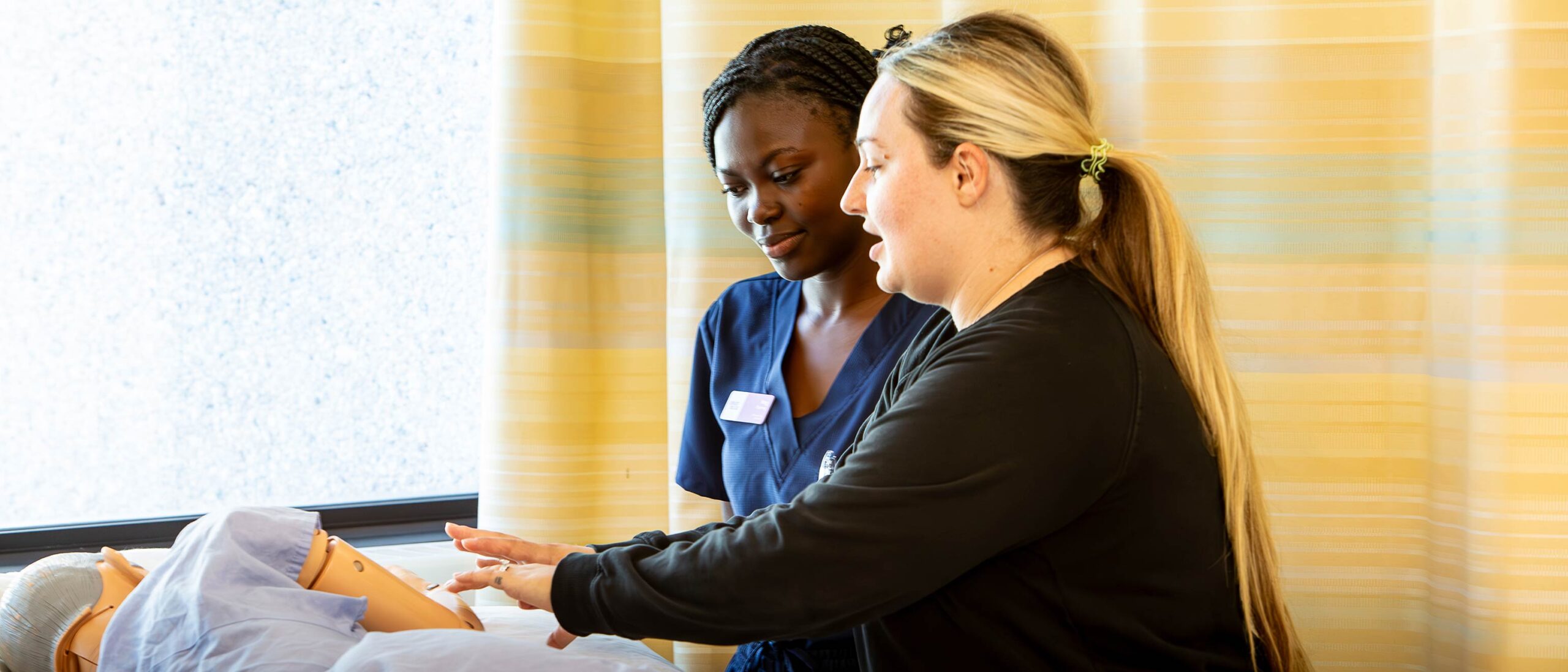
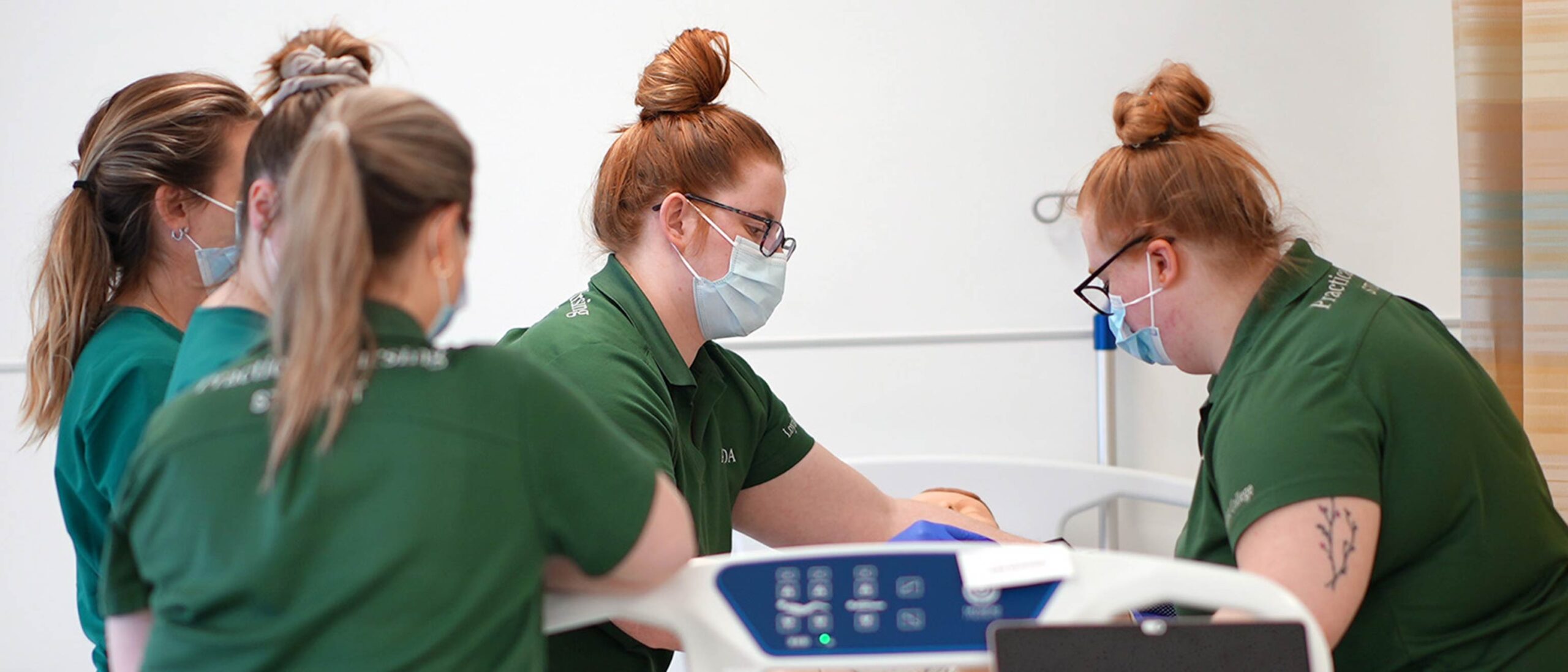
Hands-on learning is emphasized throughout the program. Beginning in the first semester, students work with hi-fidelity clinical simulators in our cutting-edge Human Simulation Lab. Realistic, interactive practice scenarios allow students to develop confidence in their skills before performing them in the workplace.
Students gain varied clinical experience in hospitals, as well in community agencies and long-term care facilities. In the final semester, each student works one-on-one with a Registered Practical Nurse during an eight-week clinical consolidation. This intensive experience prepares students for independent practice in a “pre-grad” clinical placement. Students are expected to participate in day, evening, night and weekend clinical experiences.
Graduates are eligible to write the Canadian Practical Nurse Registration Examination and if successful, become registered members of the College of Nurses of Ontario. Over the past several years, Loyalist graduates have been successful on their first writing of the exam, scoring at or above national and provincial averages in all categories.
Tuition/Fees: $4,404 (two semesters)
Consumables Fee: $25
Books and Supplies: $1,500 (two semesters)
Travel and parking expenses may be incurred during clinical placements
(a) Required academic preparation –
OR
NOTE: Practical Nursing is a high demand program – possession of the minimum admissions requirements does not guarantee an offer of admission.
(b) Health: Applicants who accept admission to the program are required to provide confirmation of good health and immunization against certain communicable diseases. Written evidence of these requirements is a condition of registration and placement in clinical practice agencies and
must be submitted upon acceptance into Semester One.
(c) Admission from Pre-Health: Applicants who have successfully completed the Loyalist College Pre-Health Science Certificate, OR
Students who have received 65% in each of the following Loyalist College Pre-Health/General Arts and Science courses: Introductory Language Theory and Composition, Mathematics 1, Human Biology, and Chemistry. Apply through ontariocolleges.ca by February 1, 2012.
(d) CPR and First Aid: Students are required to show proof of current CPR certification – Basic Cardiac Life Support (BCLS), Level C, Basic Rescuer, as well as a Standard First Aid Course, prior to the start of Semester Two. These certificates must be valid for the duration of the program.
(e) Course Challenge Opportunities: Applicants with relevant educational and/or employment experience are eligible to challenge selected courses.
(f) Criminal Record Check: In order to participate in clinical placements, students will be required to complete a criminal record check by their local police service. This must be submitted prior to the start of Semester Two. A vulnerable sector check may be required – please check with the contact above to confirm details.
NOTE: To become a Registered Practical Nurse in the province of Ontario, a recent Canadian Police Information Centre Criminal Record Synopsis (CPIC) is required.
Graduates who wish to pursue a B.Sc.N. in Nursing are eligible for admission to Year One of the Loyalist/Brock collaborative degree program. Applicants must have successfully completed the diploma in Practical Nursing with a minimum overall average of 75% with a minimum of 70% in each course to be eligible for admission consideration. Course exemptions will be considered on an individual basis. Students must apply through ontariocolleges.ca before February 1st to be considered for admission.
Focuses on the development of skills required to obtain, understand and convey information. Skills included: effective use of library and internet resources, spelling, grammar, sentence and paragraph structures, punctuation, vocabulary, report, letter and scholarly writing.
Students will be introduced to college-life and the role of the Practical Nursing Student. , Health promotion, including teaching/learning principles and effective communication, are discussed. The concept of caring, therapeutic relationships and the role of the College of Nurses of Ontario will be discussed.
The principles and determinants of lifespan development are discussed. Included is the application of developmental theories related to physical, psychological, social, cognitive, moral, and spiritual changes throughout the lifespan.
This course provides a detailed examination of the anatomy and physiology of the healthy human body. This course is an applied science course which provides a basis for understanding disease processes and therapeutic approaches. Corequisite: PNUR 1000 Professional Roles 101, PNUR 1004 Fundamentals of Nursing, PNUR 1005 Fundamentals of Nursing Lab
This course provides an introduction to the fundamentals of nursing care. The nursing process is introduced as a tool for delivery of effective nursing care. The principles and procedures related to selected psychomotor skills are introduced as preparation for lab and clinical practice. Corequisite: PNUR 1000 Professional Roles 101, PNUR 1003 Anatomy & Physiology, PNUR 1005 Fundamentals of Nursing Lab
This course provides opportunity for lab based practice in a simulated setting to develop skills necessary to promote health, provide basic care and communicate with clients. Corequisite: PNUR 1000 Professional Roles 101, PNUR 1003 Anatomy & Physiology, PNUR 1004 Fundamentals of Nursing
Includes the theory necessary to administer medications safely: pharmacokinetics, pharmacodynamics, legal aspects and selected drug classifications are covered.
Methods of physiological and psychosocial assessment throughout the lifespan are studied, as well as, interview skills to obtain a health history. Documentation of assessment data is also included.
Focuses on the ethical and professional standards and legal requirements for professional practice for the practical nurse.
Introduces the student, in a simulated setting, to selected skills required for promoting health and preventing/managing illness. Principles of medication administration are included.
Provides the theory to enable students to provide nursing care for clients experiencing common health conditions. Pathology, diagnostic tests, therapeutics and nursing interventions are presented. Nursing care is explored using the nursing process. Theory and simulation for the related cognitive and psychomotor skills are included.
Provides clinical practice in the delivery of nursing care to stable individuals, older adults, and their families experiencing common health conditions. Practice settings are inpatient hospital units and nursing homes. Administration of medication will be included.
This course focuses on advocacy, leadership and change theory, and how these concepts affect current trends and issues in the profession of nursing. Prerequisite: COMM 1015 Workplace Communication (Min. Grade), PNUR 1000 Professional Roles 101 , PNUR 1001 Lifespan Development , PNUR 1003 Anatomy & Physiology, PNUR 1004 Fundamentals of Nursing , PNUR 1005 Fundamentals of Nursing Lab . Corequisite: PNUR 2004 Alterations in Health Lab 2, PNUR 2005 Alter. in Health Clinical 2, PNUR 2006 Young Family Clinical
This course examines alterations in health for adults and their families experiencing acute illness, related to or resulting in a surgical intervention. Perioperative nursing care and care provided by other health professionals will be explored. Prerequisite: COMM 1015 Workplace Communication , PNUR 1000 Professional Roles 101, PNUR 1001 Lifespan Development , PNUR 1003 Anatomy & Physiology , PNUR 1004 Fundamentals of Nursing , PNUR 1005 Fundamentals of Nursing Lab. Corequisite: PNUR 2003 Practical Nursing Theory 302, PNUR 2004 PNUR Practice: Lab 301, PNUR 2005 PNUR Practice: Clinical 301, PNUR 2006 PNUR Practice: Clinical 302
The course provides theory to facilitate utilization of the nursing process to guide nursing care for young families. It explores the nursing care for childbearing clients and their family, during the prenatal, intrapartal, and postpartal period. Selected health promotion and illness prevention activities in childhood are examined along with the nursing care of children experiencing hospitalization and selected illnesses. Theory related to cognitive and psychomotor skills is included. Prerequisite: COMM 1015 Workplace Communication , PNUR 1000 Professional Roles 101 , PNUR 1001 Lifespan Development , PNUR 1003 Anatomy & Physiology , PNUR 1004 Fundamentals of Nursing , PNUR 1005 Fundamentals of Nursing Lab . Corequisite: PNUR 2002 Practical Nursing Theory 301, PNUR 2004 PNUR Practice: Lab 301, PNUR 2005 PNUR Practice: Clinical 301, PNUR 2006 PNUR Practice: Clinical 302
This course integrates theory from concurrent course work, using independent and facilitated simulations, demonstration and opportunity for practice to facilitate development of relevant skills needed to care for clients and their families, across the lifespan, experiencing acute alterations in health resulting in or related to a surgical intervention. Prerequisite: COMM 1015 Workplace Communication , PNUR 1000 Professional Roles 101 , PNUR 1001 Lifespan Development , PNUR 1003 Anatomy & Physiology , PNUR 1004 Fundamentals of Nursing , PNUR 1005 Fundamentals of Nursing Lab . Corequisite: PNUR 2000 Professional Issues & Trends, PNUR 2002 Alterations in Health 2, PNUR 2003 Young Family, PNUR 2005 Alter. in Health Clinical 2, PNUR 2006 Young Family Clinical
This course provides practice experience related to the client and family experiencing a surgical intervention following an acute alteration in health. Nursing care is explored using the nursing process. The setting for this experience is the acute surgical floor. Prerequisite: COMM 1015 Workplace Communication , PNUR 1000 Professional Roles 101 , PNUR 1001 Lifespan Development , PNUR 1003 Anatomy & Physiology , PNUR 1004 Fundamentals of Nursing , PNUR 1005 Fundamentals of Nursing Lab. Corequisite: PNUR 2000 Professional Issues & Trends, PNUR 2002 Alterations in Health 2, PNUR 2003 Young Family, PNUR 2004 Alterations in Health Lab 2, PNUR 2006 Young Family Clinical
This course provides practice experience related to care of the childbearing client and family, as well as the child experiencing illness. Nursing care is explored using the nursing process. Practice settings include inpatient hospital settings and the Loyalist Simulation Lab. Opportunity for an observational experience in the operating room and day surgery will also be provided. Prerequisite: COMM 1015 Workplace Communication, PNUR 1000 Professional Roles 101, PNUR 1001 Lifespan Development , PNUR 1005 Fundamentals of Nursing Lab . Corequisite: PNUR 2000 Professional Issues & Trends, PNUR 2002 Alterations in Health 2, PNUR 2003 Young Family, PNUR 2004 Alterations in Health Lab 2, PNUR 2005 Alter. in Health Clinical 2
Examines key concepts regarding society, socialization, diversity, analysis of family, and social change.
Focuses on research, the research process, process of critiquing research, and the relevance of research to the practical nursing profession. Basic statistical terminology and interpretation of statistical data are included.
Provides the theoretical bases to assume a role as a professional graduate practical nurse. Concepts related to leadership theory, conflict resolution, and career planning are included.
Provides the theory to enable students to provide nursing care to individuals and their families, in their homes, who are experiencing common health conditions. Theory and simulation for the related cognitive and psychomotor skills are included. The role of community nursing agencies will be included.
Provides practice experience related to the nursing care of clients experiencing common health conditions. Nursing care is explored using the nursing process. The application of leadership principles will be included. Practice settings include complex continuing care in-patient units.
Provides the theory to enable students to provide nursing care for clients and their families experiencing an alteration in psychosocial functioning. An exploration of common problems, etiology, diagnostic tests, therapeutics and nursing interventions are included. Theory and simulation for the related cognitive and psychomotor skills are included. The role of community supports is included.
Provides practice experience related to the client and family experiencing an alteration in psychosocial functioning. Nursing care is explored using the nursing process. Practice settings include inpatient hospital settings, as well as, supportive community agencies.
Focuses on preparing the student for the pre-graduate experience. The integration of knowledge and skills from previous semesters will be emphasized.
Provides concentrated practical experience in a variety of settings including medical/surgical, psychiatric, obstetrics/paeds, complex continuing care nursing units, as well as, community agencies / institutions and nursing homes to prepare students for the beginning practitioner’s role.