SEPTEMBER
Two-Year Ontario College Diploma
| Contact: | E-mail: |
|---|---|
| Michael Nitsch | mnitsch@loyalistc.on.ca |
Surveying is essential to virtually any engineering project, including:
You will find diverse job opportunities:
For professional certification in Ontario:
At Loyalist, you will get a well-rounded education. Your first year combines:
Specialization in the second year will provide:
In a major second-year project, students draw on their skills and knowledge to create plans for a subdivision, taking into account such factors as:
• municipal planning objectives
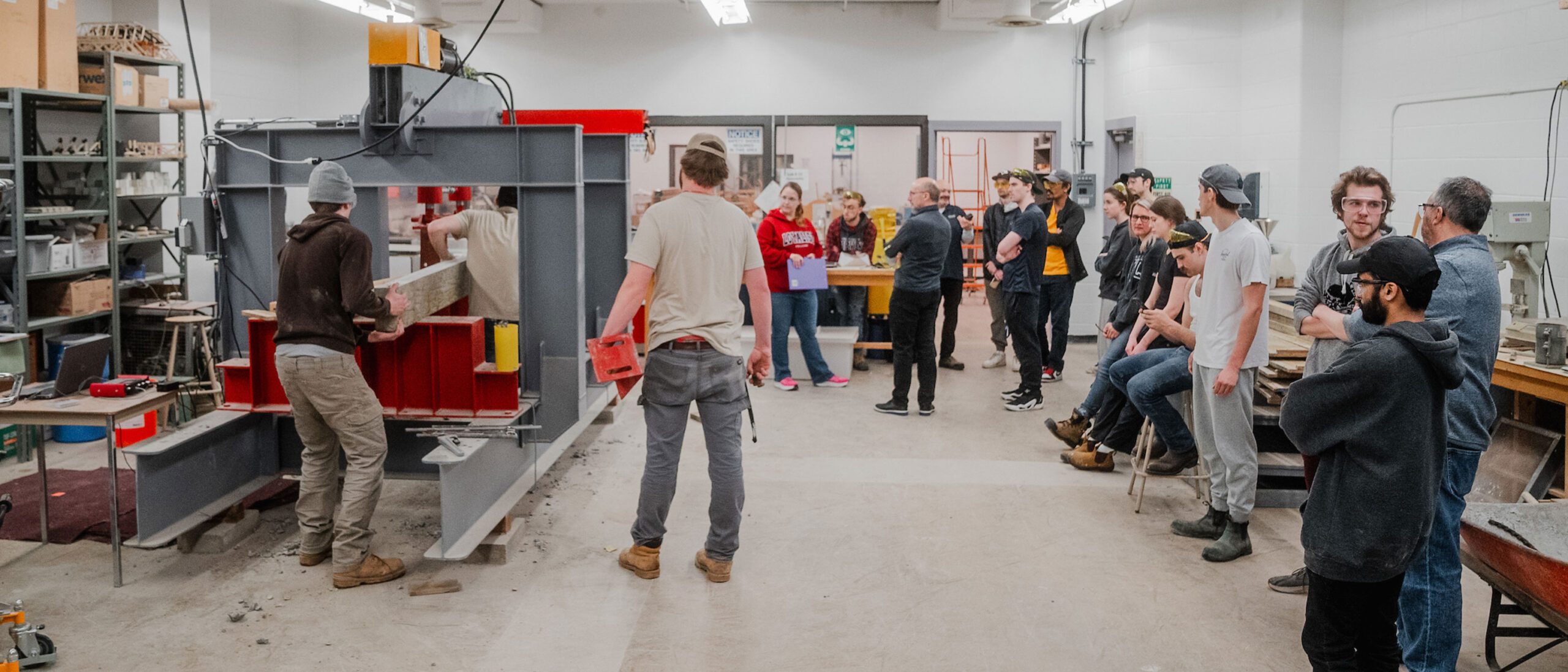
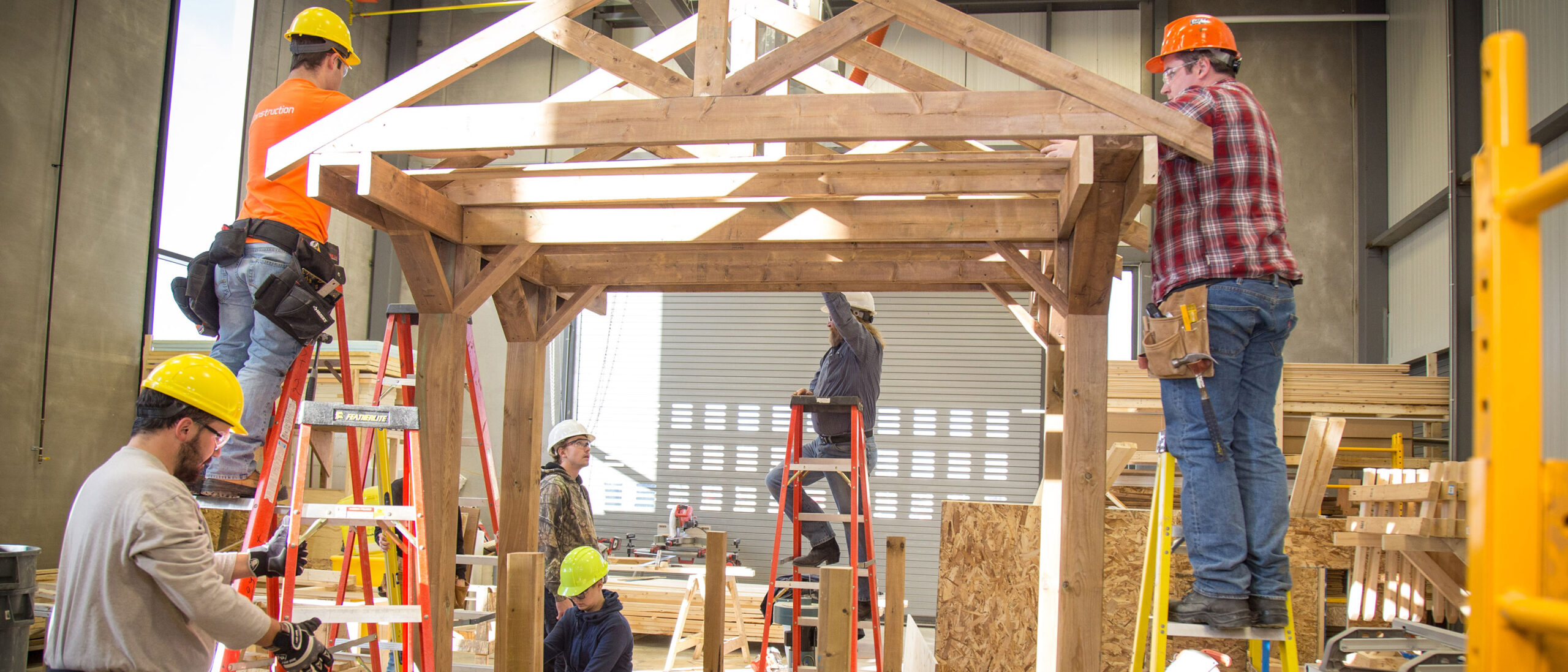
This course deals with materials used in buildings, and the methods and equipment used in constructing with these materials. Materials include: concrete, masonry, wood and steel.
This course introduces students to the principles involved in reading, understanding, and creating construction drawings in a computerized environment using AutoCAD software.
Develops communication skills for the presentation of technical information in business documents that meet the needs of clients and customers. Documents and presentations are produced in Word and PowerPoint.
Students learn to use the mathematical tools that are required in their engineering subjects. Building sciences applications of algebra, geometry and trigonometry are emphasized.
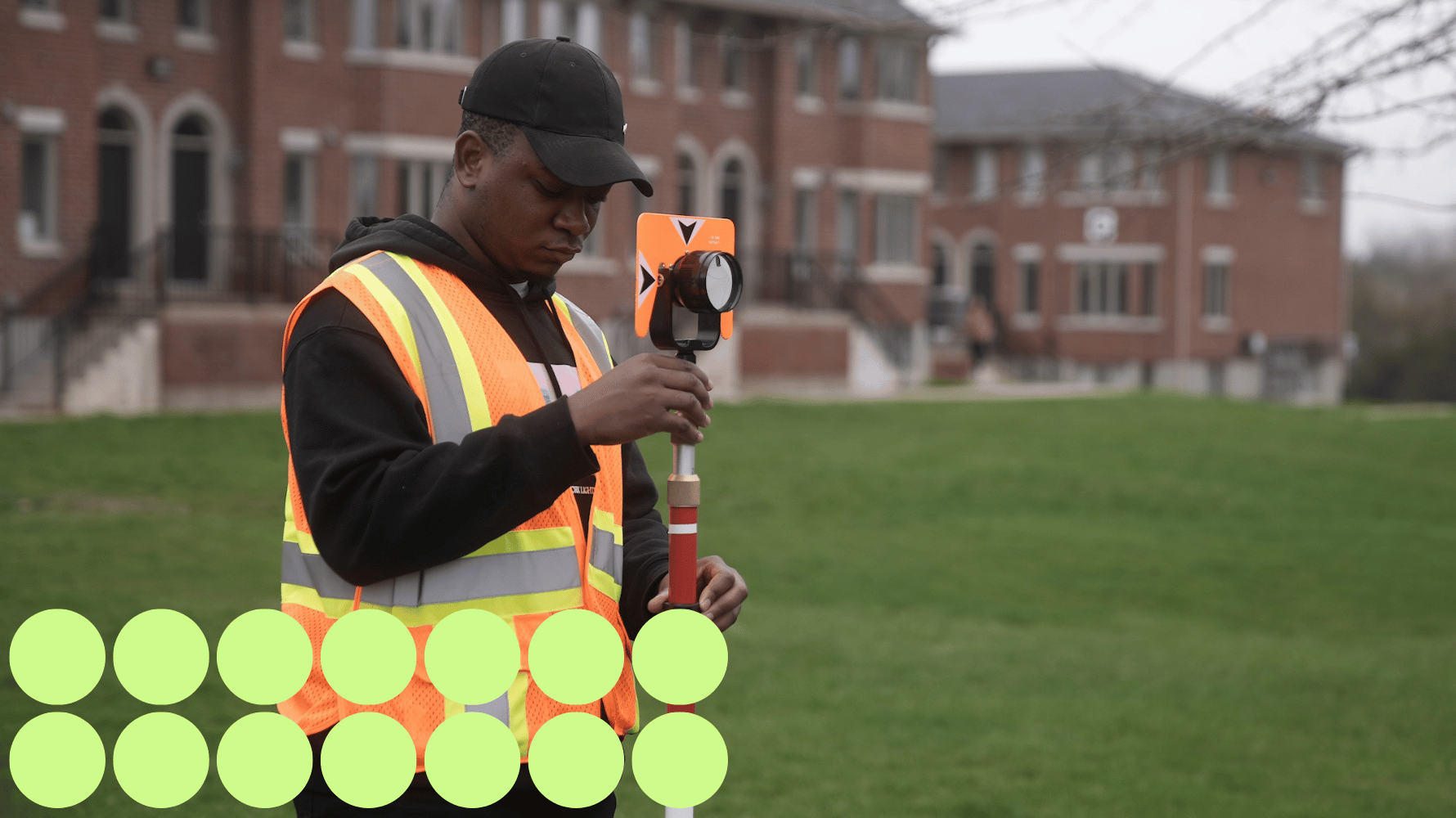
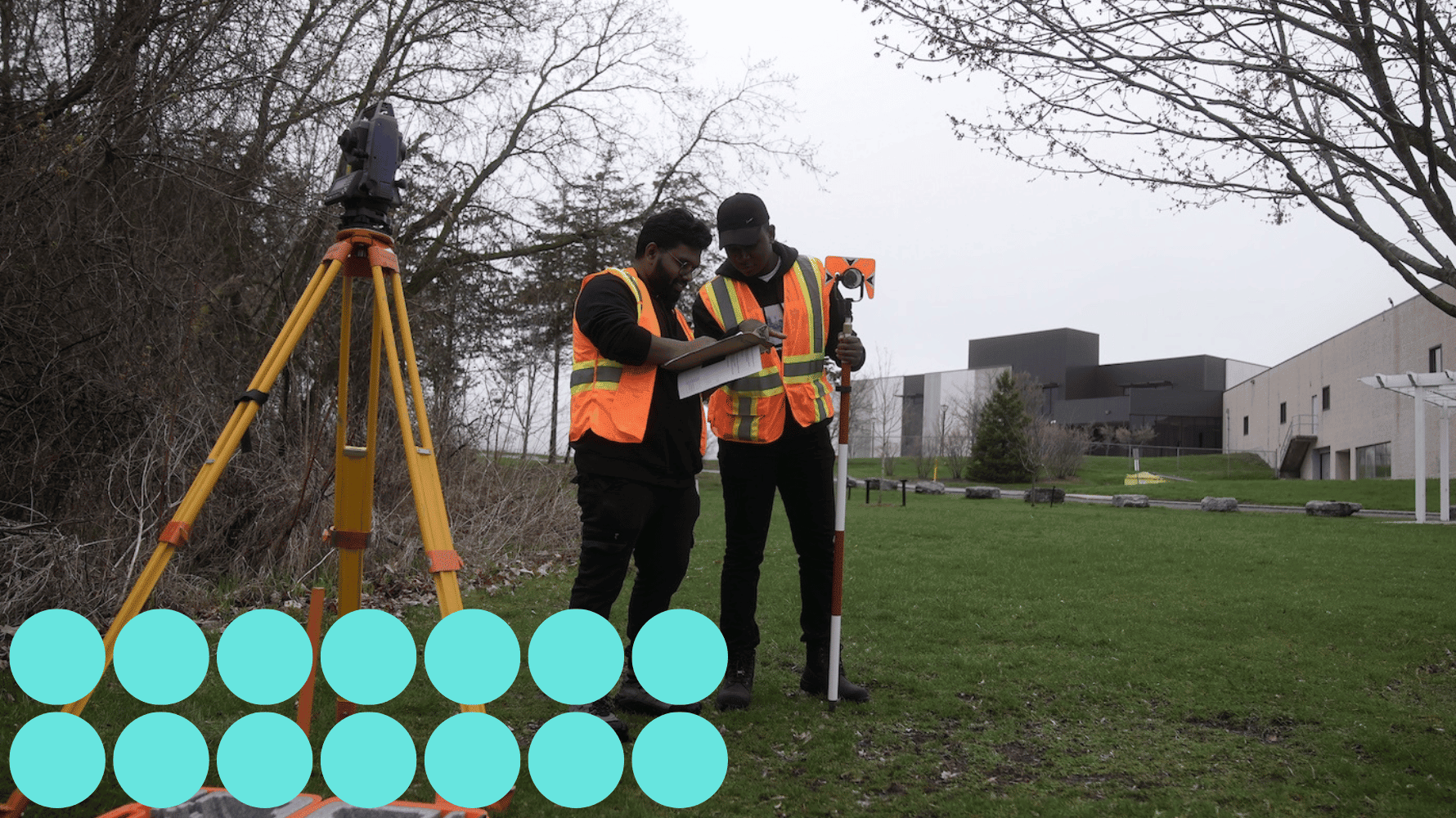
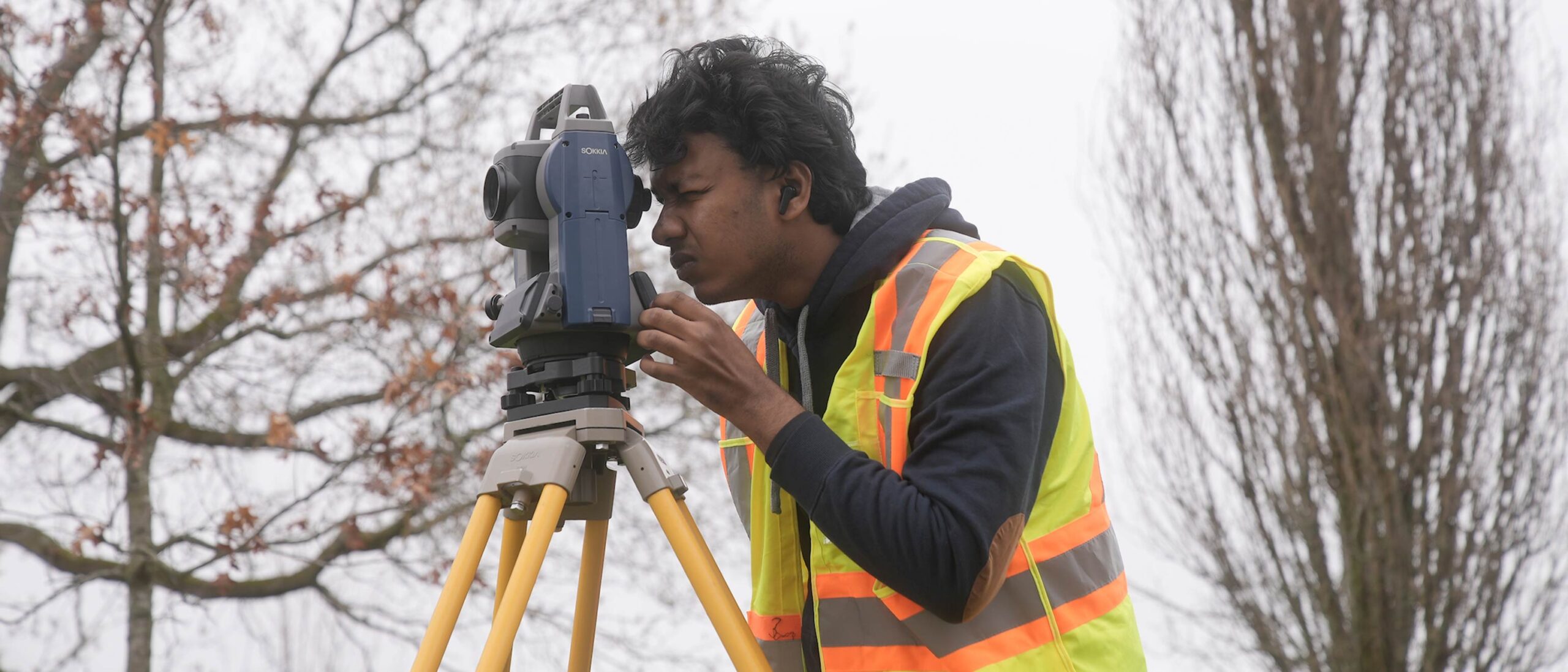
This is an introductory course in surveying. Basic principles are applied to level, distance, and Theodolite field exercises. Calculations and drafting relating to field work are part of this course.
In this course students practice the fundamentals of field traversing with emphasis on the use of basic instruments, standard field procedures, and the taking of concise and accurate field notes.
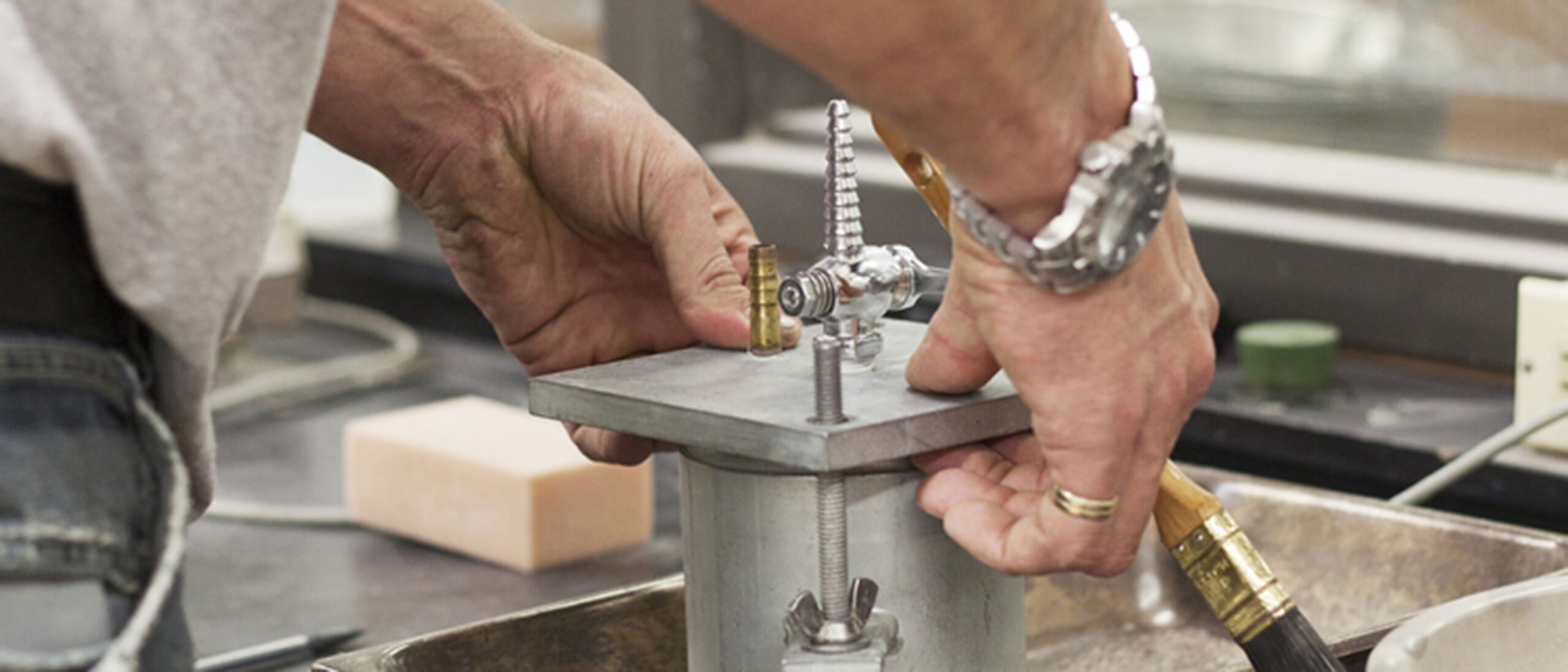
This course deals with materials used in civil engineering works, and the methods and equipment used in construction with these materials. Materials include: soils, concrete, steel, heavy timber, and asphalt. Prerequisite: BLDG 1005
A continuation of CAD 1, learning techniques of text, blocks, and dimensions. An introduction to isometric and 3D views, utility functions and customized menus. Prerequisite: CADD 1004
Students are introduced to Microsoft Office software. The basics of Microsoft Word are learned and Microsoft Excel is used with engineering applications.
This is a continuation of Mathematics 1. Prerequisite: MATH 1012
Level, stadia, topographic and construction survey methods are covered. The development of profiles, cross-sectioning for contour, the placing of grade stakes and batterboards, and circular curves are studied. Drafting and calculations associated with these surveys are performed. Prerequisites: MATH 1012 & SURV 1000
A study of acts and regulations affecting planning in Ontario together with the survey requirements for the preparation of draft plans of subdivisions. Preparations of final plans of subdivisions are also studied.
The celestial sphere and spherical trigonometry are introduced as background for the use of astronomy in determination of direction on the surface of the earth. Hand calculators and microcomputer solutions are used in the reduction of field observations. Prerequisite: MATH 1012
Students are introduced to the theories and techniques used in the design and construction of rural and urban highways. The field survey data required for use in Highway Technology 2 is collected. Prerequisite: SURV 1001
Students receive a practical introduction to the principles of Geographic Information Systems through projects and assignments produced in AutoDESK Map. Students learn the fundamentals of Global Positioning Systems data collection and use these to carry out mapping and drawing projects. Leica GPS System 500 base station and two rovers are used for data collection.
A study of the role of the construction superintendent with special emphasis on leadership, labour relations, construction management and safety.
Students are placed with local surveying firms one day per week for 11 weeks of the fall semester. Prerequisite: SURV 1001
The emphasis in this course is construction layout. A number of projects involving layout of buildings, sewers and roads are done using traditional and modern methods and equipment. Prerequisite: SURV 1001
Students gain additional practice in field traversing using a wider range of field instruments. There is continued emphasis on standard field procedures and the taking of concise and accurate field notes. Prerequisite: SURV 1002
Using the data collected in Highway Technology 1, students create a set of drawings for a rural road project. Drawings include those for horizontal and vertical alignment and control, cross sections and volumes. Students calculate a final tender price for construction. Prerequisite: BLDG 2006 & SURV 2000
Using aerial photos and simple instruments, students learn to make quantitative measurements of area and height. Rural and urban terrain features on the photographs are studied for purposes of recognition and evaluation.
Legal Surveying 2
A study of real estate transactions and title searching in Ontario.
Microcomputer solutions of survey problems are studied. Precise levels and direction theodolites are used in field exercises. CAD and/or manual drafting exercises are integrated with field computations. Prerequisites: SURV 1000 & SURV 1001